A bench grinder is the one shop tool that does three jobs without complaint: it puts fresh edges on chisels, plane irons, mower blades, and axes; it knocks rust and burrs off steel; and with a wire wheel, it cleans up old hardware faster than any brush you’ll hold by hand. It bolted to the bench, plugs into the wall, and runs all day. There’s no battery to babysit and almost nothing to wear out besides the wheels.
The catch is that most people buy the wrong one. A 3,600 RPM grinder cooks the temper out of a chisel edge in seconds, while slow-speed sharpening grinders run half that speed for a reason. Wheel size, motor power, and even the tool rest design separate a grinder you’ll use weekly from one that gathers dust. Here are the five we’d put on our own benches, matched to how you actually work.
Our Top Picks at a Glance
| Award | Model | Price | Rating | Why We Picked It | Buy |
|---|---|---|---|---|---|
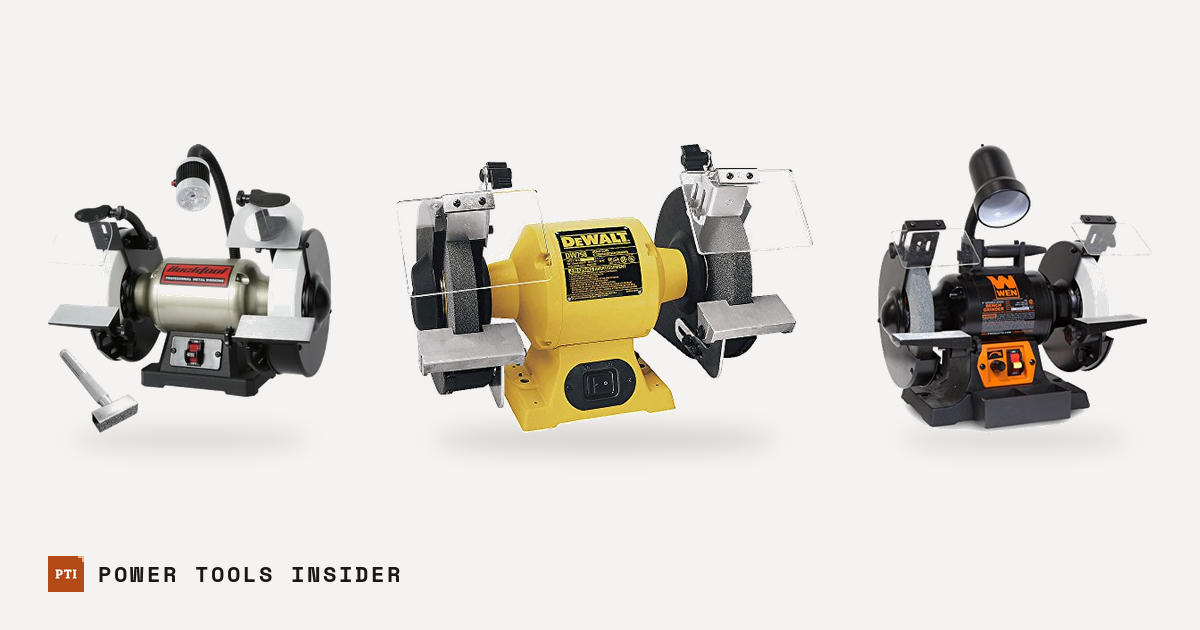
| Best Overall | DeWalt DW758 | ~$159 | 4.7 | 3/4 HP at 3,600 RPM, cast iron base, 12.5 inches between wheels. The workhorse most shops should buy first. | Buy Now |
| Best for Sharpening | BUCKTOOL TDS-200C4HL | ~$177 | 4.6 | 1,750 RPM slow speed with a 1.5-inch wide wheel that takes a CBN wheel. Won’t blue an edge. | Buy Now |
| Best Variable Speed | WEN BG4280 | ~$140 | 4.2 | 2,000-3,400 RPM dial, LED eye guards, quench tray, at a budget price. | Buy Now |
Prices checked at time of writing and change without notice. Jump to the full DeWalt DW758 review.
The 5 Best Bench Grinders of 2026
Every grinder here is an 8-inch model. Six-inch grinders cost less, but the smaller wheels wear a groove in the middle within months and run faster at the rim for the same RPM, which means more heat. The 8-inch wheel is the right size for general shop work and it’s what most replacement wheels and wire wheels are made for.
| Model | Motor | Speed | Wheel Type | Best For | Buy |
|---|---|---|---|---|---|
| DeWalt DW758 | 3/4 HP | 3,600 RPM | Coarse + fine AO | All-around grinding and heavy stock removal | Buy Now |
| BUCKTOOL TDS-200C4HL | 3/4 HP | 1,750 RPM | Wide AO, CBN-ready | Sharpening chisels, plane irons, turning tools | Buy Now |
| RIKON 80-805 | 1/2 HP | 1,750 RPM | 60 + 120 grit AO | Woodturner sharpening on a budget | Buy Now |
| WEN BG4280 | 5.0 amp | 2,000-3,400 RPM | Coarse + fine AO | Variable speed grinding on a budget | Buy Now |
| JET JBG-8W | 1 HP | 3,450 RPM | 36-grit AO + wire wheel | Fabrication shops and rust cleanup | Buy Now |
Best Bench Grinder Reviews
DeWalt DW758: Best Overall

Price: ~$159 | Rating: 4.7 (2,645 reviews)
The DW758 is what a no-nonsense grinder looks like. The 3/4 HP induction motor pushes 3,600 RPM through a pair of 8-inch wheels, and the 12.5-inch span between them means long blades and full-width workpieces actually fit. Cast iron base and motor housing keep vibration down to a low hum, and the precision-machined aluminum tool rests adjust square and stay put. With 2,645 reviews averaging 4.7 stars, this is the most-proven grinder on the market.
This is the right pick if your grinding is rust removal, bolt shaping, and mower blade work. It is not the pick for hand-tool sharpening; at 3,600 RPM you’ll draw a blue edge on a chisel before you notice it, so keep a quench tray or cup of water next to it.
Pros
- 3/4 HP induction motor handles heavy stock removal without bogging
- Cast iron base and housing, minimal vibration
- 12.5 inches between wheels fits long workpieces
- Precision-machined aluminum tool rests
- Rear exhaust ports keep the motor running cooler
- 3-year limited warranty
Cons
- Single 3,600 RPM speed, too fast for careful sharpening
- No work light included
- Stock wheels are serviceable but most users upgrade them
| Spec | Value |
|---|---|
| Wheel Diameter | 8 inches |
| Motor | 3/4 HP induction |
| Speed | 3,600 RPM, single speed |
| Distance Between Wheels | 12.5 inches |
| Base | Cast iron |
Bottom Line: The default choice for a general shop grinder. Fast, stout, and proven by thousands of owners. Pair it with a slow-speed sharpener if you do edge work.
BUCKTOOL TDS-200C4HL: Best for Sharpening

Price: ~$177 | Rating: 4.6 (320 reviews)
Slow-speed grinders run at 1,750 RPM because sharpening is about control, not speed. Half the RPM means half the friction heat, and that’s the difference between a scary-sharp chisel and a blued, ruined edge. The BUCKTOOL runs 1,750 RPM off a 4.8-amp motor rated at 3/4 HP with a 1-1/4 HP peak, so it drives a CBN wheel without stalling. That matters because a CBN wheel is the single best upgrade for tool sharpening: it never dresses down, never loads up, and holds a consistent radius for years.
The stock setup ships with an extra-wide 1-1/2 inch white aluminum oxide wheel in the main position, wide enough to accept a 1-1/2 inch CBN wheel without adapters. Tool rests are cast aluminum and tilt 0 to 45 degrees, the eye shield carries a 3x magnifier for close work, and the keyed safety switch is a nice touch if kids wander into the shop.
Pros
- 1,750 RPM slow speed, minimal heat build-up on edges
- 1-1/2 inch wide wheel accepts CBN wheels directly
- 3/4 HP rated, 1-1/4 HP peak motor drives CBN without stalling
- Tool rests tilt 0-45 degrees for grind angles
- Eye shield includes a 3x magnifier
- Keyed safety switch
Cons
- Too slow for fast rust and stock removal
- Second wheel is narrower than the main one
- CBN wheel sold separately
| Spec | Value |
|---|---|
| Wheel Diameter | 8 inches |
| Motor | 3/4 HP rated, 1-1/4 HP peak, 4.8 amps |
| Speed | 1,750 RPM |
| Main Wheel | 1-1/2 inch wide white aluminum oxide, CBN-ready |
| Tool Rest Tilt | 0-45 degrees |
Bottom Line: The best slow-speed value if you sharpen hand tools or turning gouges. Buy it, add a CBN wheel, and you have a sharpening station that will outlast the rest of the shop.
RIKON 80-805: Best Budget Slow Speed
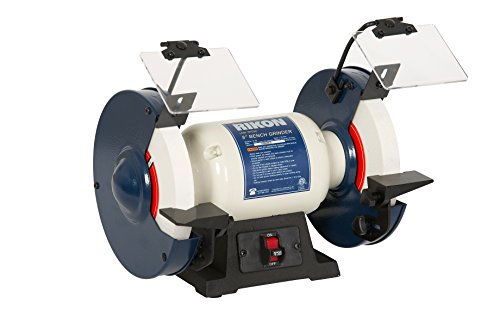
Price: ~$156 | Rating: 4.6 (848 reviews)
The RIKON does the slow-speed sharpening job for less money than the BUCKTOOL, with a different trade: a 1/2 HP motor instead of 3/4, and standard 1-inch wide wheels instead of the CBN-ready 1-1/2. You get a 60-grit wheel for shaping and a 120-grit wheel for final edges, both white aluminum oxide, which is the correct wheel family for steel edges. A diamond wheel dresser is included in the box, which is a genuinely useful bonus for truing the wheels flat.
The cast iron base sits on anti-vibration rubber feet, and at 1,750 RPM the whole machine stays calm on the bench. For woodturners sharpening gouges and skews a few times per session, this grinder covers everything the BUCKTOOL does except heavy CBN territory. If your sharpening is occasional and your budget is real, buy this one.
Pros
- 1,750 RPM slow speed for heat-free sharpening
- Ships with 60 and 120 grit white aluminum oxide wheels
- Diamond wheel dresser included
- Cast iron base with anti-vibration rubber feet
- 848 reviews averaging 4.6 stars
Cons
- 1/2 HP motor, less headroom than the BUCKTOOL
- 1-inch wheels, needs an adapter for wider CBN wheels
- No work light
| Spec | Value |
|---|---|
| Wheel Diameter | 8 inches |
| Motor | 1/2 HP induction |
| Speed | 1,750 RPM |
| Wheels Included | 60-grit and 120-grit white aluminum oxide, 1 inch wide |
| Base | Cast iron, anti-vibration rubber feet |
Bottom Line: The budget path to slow-speed sharpening. For occasional edge work it does everything the pricier slow-speed machines do.
WEN BG4280: Best Variable Speed
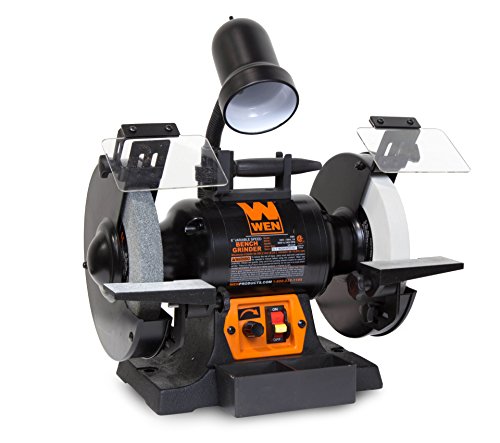
Price: ~$140 | Rating: 4.2 (424 reviews)
Variable speed is the compromise play: one grinder that slows down for careful work and speeds up for material removal. The BG4280’s 5-amp motor dials from 2,000 to 3,400 RPM, so you can drop it near slow-speed territory for tool touch-ups and push it high for cleaning up welds. It’s the only grinder in this roundup with a quenching tray built into the base for cooling workpieces, and the adjustable eye guards carry built-in LED lights, which helps more than it sounds like it would when you’re working at the wheel.
WEN backs it with a 2-year warranty and the price is the lowest here. The trade-offs: the 5-amp motor is lighter-duty than the 3/4 HP units, the tool rests are functional but not the machined-aluminum quality of the DeWalt, and the 4.2 rating reflects a few more QC complaints than the rest of this list. For a first grinder or a light-duty shop bench, it’s a smart buy.
Pros
- 2,000-3,400 RPM variable speed dial
- Lowest price in the roundup
- Built-in LED work lights in the eye guards
- Onboard quenching tray
- 2-year warranty
Cons
- 5-amp motor, lighter duty than the 3/4 HP picks
- Tool rests are basic
- Variable speed still tops out under true 3,600 RPM material-removal pace
| Spec | Value |
|---|---|
| Wheel Diameter | 8 inches |
| Motor | 5 amps |
| Speed | 2,000-3,400 RPM variable |
| Work Light | LED in eye guards |
| Quenching Tray | Yes, onboard |
Bottom Line: The best first bench grinder. Variable speed covers more jobs than any single-speed unit at this price, and the lights and quench tray are real conveniences.
JET JBG-8W: Best for Fabrication and Rust Cleanup

Price: ~$470 | Rating: 4.6 (165 reviews)
The JET is the shop tool, not the hobby tool. A UL-listed 1 HP motor spins at 3,450 RPM, and the left spindle carries a crimped wire wheel out of the box, which turns this machine into a rust-and-paint stripper that no handheld drill attachment can match. The right side carries a 36-grit vitrified aluminum oxide wheel for aggressive stock removal. Cast iron wheel guards have built-in dust chutes, spark guards adjust as one piece, and the eye shields are large and quick to reposition.
This is the grinder for welding shops, restoration work, and anyone who spends real time at the wheel. It costs three times the DeWalt, and what you’re paying for is the 1 HP motor that doesn’t slow under a heavy hand, the included wire wheel, and JET’s industrial build. If your grinding sessions run long and your workpieces are heavy, it pays for itself in time.
Pros
- 1 HP UL-listed motor, no bog under load
- Crimped wire wheel included for rust and paint removal
- 36-grit vitrified wheel for fast stock removal
- Cast iron guards with dust chutes
- One-piece quick-adjust spark guards
Cons
- Nearly 3x the price of the DeWalt
- Single speed, not for sharpening
- Heavier footprint, needs a solid bench
| Spec | Value |
|---|---|
| Wheel Diameter | 8 inches |
| Motor | 1 HP, UL-listed |
| Speed | 3,450 RPM |
| Wheels Included | 36-grit aluminum oxide + crimped wire wheel |
| Guards | Cast iron with dust chutes |
Bottom Line: The upgrade for serious metalwork. If you weld, fabricate, or restore, the wire wheel and 1 HP motor earn their keep every week.
Bench Grinder Buying Guide
Why 8 Inches Beats 6
Wheel size decides how long the machine stays useful. A 6-inch grinder is cheaper and lighter, but the small wheel wears a concave groove from grinding the same parts over and over, and once that groove sets in, the wheel can’t carry a flat edge across a workpiece. The same motor also spins a 6-inch wheel at a higher surface speed than an 8-inch at equal RPM, so it burns metal faster and throws more heat. The 8-inch wheel costs a few dollars more and lasts years longer. Buy the 8.
Speed: 3,450 RPM vs 1,750 RPM
Standard grinders run near 3,450-3,600 RPM. That’s the right speed for rust removal, weld cleanup, and shaping metal, where friction is the point. It’s the wrong speed for sharpening. At 3,600 RPM, a chisel edge reaches scorching temperature in about a second of contact, and blued steel won’t hold an edge. Slow-speed grinders run 1,750 RPM, which lets you grind a burr and watch the edge instead of dipping the steel in water every two seconds.
The cleanest setup is two machines: a fast grinder for metalwork and a slow one for sharpening. If you can only have one and you sharpen hand tools at all, get the slow speed. Rust can wait. A ruined chisel can’t.
Wheel Grit and Wheel Type
Stock wheels are usually a coarse 36-60 grit and a fine 100-120 grit. Coarse shapes and removes. Fine touches up. Three wheel families matter:
- Aluminum oxide: the standard wheel for steel. White aluminum oxide cuts cooler than gray and is the right choice for sharpening edges.
- Silicon carbide: for non-ferrous metal, stone, and glass. Don’t use it on tool steel.
- CBN (cubic boron nitride): the premium sharpening wheel. It holds its shape for years, never needs dressing, and runs true. A single 180-grit CBN wheel costs $120-160 but replaces a decade of consumable wheels.
When you dress a conventional wheel flat, use a diamond dresser. A rounded or grooved wheel makes inconsistent edges no matter how good your technique is.
Motor Power
Bench grinder motors range from about 1/3 HP to 1 HP. Under 1/2 HP, the motor bogs when you press hard, and a bogging motor means burning. For general shop use, 1/2 HP handles most work and 3/4 HP gives comfortable headroom. If you’re driving CBN wheels or doing heavy rust removal all day, 3/4 to 1 HP is the right range. Induction motors only; brushless universal motors from cheap grinders scream, wear out, and vibrate.
Safety Features Worth Having
- Adjustable spark guards: the metal shield between the wheel and you. Set it within 1/16 inch of the wheel.
- Eye shields: clear polycarbonate shields over each wheel. LED-equipped guards (WEN BG4280) help you see the work.
- Tool rests: should adjust tight and hold square. Set the gap to the wheel within 1/8 inch; wider gaps pull workpieces down into the wheel.
- Anti-vibration feet: a grinder walking across the bench is a grinder you’ll stop using.
Wear safety glasses under the shields regardless. Wheels shed grit at high speed, and a shield is not a face shield.
Bench Mounting
Bolt the grinder down. Every serious grinder has base bolt holes, and four lag bolts into a solid bench (or a board of plywood on top) kills most residual vibration. If your bench is light, add mass instead of speed: a sheet of 3/4 inch plywood bolted through doubles as a mounting plate and damping layer.
Frequently Asked Questions
What size bench grinder is best for most people?
An 8-inch bench grinder is the right size for most home and professional shops. It runs slower at the rim than a 6-inch at the same RPM, resists wearing a groove in the wheel, and handles full-width blades and workpieces. Six-inch grinders make sense only for very light, occasional use.
What is a slow speed bench grinder used for?
Slow-speed grinders run at about 1,750 RPM and are built for sharpening: chisels, plane irons, turning gouges, knives, and axes. The lower speed cuts friction heat so you can hold an edge geometry without drawing the temper out of the steel. For rust removal and weld cleanup, a standard 3,450-3,600 RPM grinder is the better tool.
Can I put a wire wheel on a bench grinder?
Yes, as long as the wheel arbor matches the grinder’s 5/8-inch spindle and the wheel is rated for the grinder’s RPM. The JET JBG-8W ships with a crimped wire wheel on one side. A wire wheel turns any grinder into a rust, paint, and corrosion stripper for hardware, and it’s one of the most-used accessories in a working shop.
What does CBN mean on a grinding wheel?
CBN stands for cubic boron nitride, a synthetic abrasive nearly as hard as diamond that’s ideal for hardened steel. A CBN wheel holds its shape for years without dressing, runs cool, and produces consistent sharpening results that conventional aluminum oxide wheels can’t match. They cost $120-160 in 8-inch sizes but outlast dozens of conventional wheels.
How fast should a bench grinder spin for sharpening?
About 1,750 RPM. Standard grinders run 3,450-3,600 RPM, which is roughly double, and that speed scorches tool steel edges in seconds of contact. If sharpening is a primary use, buy a slow-speed grinder or a variable speed model you can dial down below 2,000 RPM.
Do bench grinders need to be bolted down?
Yes. Bolt the base to a solid bench with four lag bolts through the mounting holes. An unbolted grinder vibrates, walks across the bench, and makes every grind less accurate. Adding a 3/4-inch plywood plate between the grinder and bench helps damp vibration on lighter benches.
Power Tool Insider is reader-supported. When you buy through links on our site, we may earn an affiliate commission at no extra cost to you. This doesn’t affect our recommendations. We only recommend tools we’d actually use. Full disclosure.