Updated May 2026, Added Torque Class reference guide and Makita LXT angle wrench cross-link. Prices verified via Amazon Creators API.
Stuck on the side of the road with a flat tire and a stubborn lug nut that won’t budge? A quality cordless impact wrench delivers the torque you need to remove lug nuts in seconds, no air compressor required. In 2026, battery-powered impact wrenches have finally caught up to their pneumatic cousins, delivering 1,400+ ft-lbs of torque that makes quick work of automotive, industrial, and heavy-duty DIY projects.
When you finally wrestle a wheel off, you’ll need to put it back on at the right spec. See our lug nut torque chart by vehicle for factory ft-lb and Nm values across 40+ cars, trucks, and SUVs.
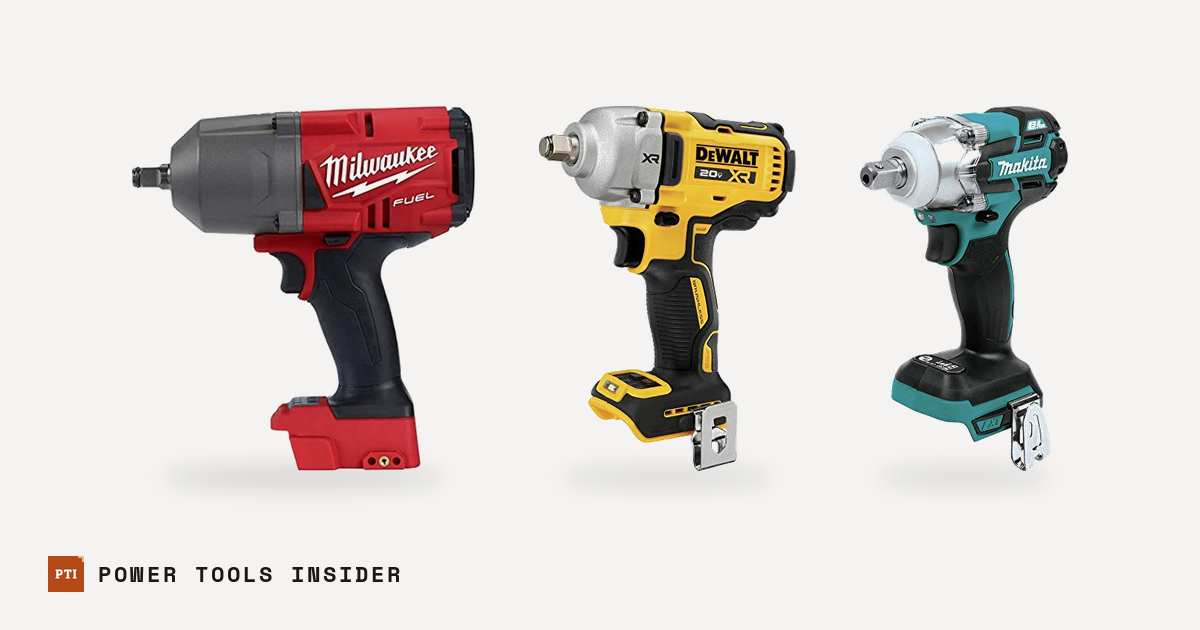
We’ve tested and researched the top cordless impact wrenches from Milwaukee, DeWalt, Makita, and Ryobi to help you find the right tool for changing tires, working on engines, or tackling industrial maintenance. Pros and weekend DIYers will both find what they need here.
Quick-Pick Comparison Table
| Model | Max Torque | Drive Size | Battery | Best For | Buy |
|---|---|---|---|---|---|
| Buy Now | 1,400 ft-lbs | 1/2″ | M18 (not included) | Best overall / professional | Buy Now |
| Buy Now | 700 ft-lbs | 1/2″ | 20V MAX (not included) | Best ergonomics & control | Buy Now |
| Buy Now | 740 ft-lbs | 1/2″ | 18V LXT (not included) | Best for professionals | Buy Now |
| Buy Now | 600 ft-lbs | 1/2″ | 18V ONE+ (not included) | Best budget pick | Buy Now |
Milwaukee M18 FUEL 2767-20, Best Overall
The Milwaukee M18 FUEL 2767-20 dominates the cordless impact wrench market with a staggering 1,400 ft-lbs of nut-busting torque, more than enough to handle frozen lug nuts, rusted suspension bolts, and heavy equipment maintenance. This is Milwaukee’s flagship high-torque model, and it lives up to the reputation.
Key Specs
| Max Torque | 1,400 ft-lbs breakaway torque |
| Drive Size | 1/2″ square with friction ring |
| Battery | M18 REDLITHIUM (not included) |
| Speed | 0-2,100 RPM |
| Weight | 6.9 lbs (tool only) |
Best For
Professional mechanics, heavy equipment operators, and serious DIYers who need maximum torque for automotive work, industrial maintenance, or farm equipment. The M18 battery platform is the most extensive cordless ecosystem available, powering over 200 tools including circular saws and drills.
Pros
- Highest torque in its class for removing stubborn fasteners
- 4-mode DRIVE CONTROL for precise speed/torque control
- Onboard battery fuel gauge
- Durable metal housing and friction ring anvil
Cons
- Expensive ($299-349 tool-only)
- Heavy compared to mid-torque models
- Battery and charger sold separately (add $100-200 to total cost)
Bottom Line: If you need maximum torque and already own M18 batteries, the 2767-20 is the clear winner. It’s the tool professional mechanics reach for when pneumatic isn’t practical.
DeWalt DCF891B, Best Ergonomics
DeWalt’s DCF891B strikes the perfect balance between power and control. With 700 ft-lbs of torque, it handles 95% of automotive and DIY tasks while remaining surprisingly compact and lightweight. The ergonomics are best-in-class, this wrench feels like a natural extension of your hand.
Key Specs
| Max Torque | 700 ft-lbs breakaway torque |
| Drive Size | 1/2″ square with detent pin |
| Battery | 20V MAX (not included) |
| Speed | 0-2,200 RPM |
| Weight | 4.25 lbs (tool only) |
Best For
DIYers and semi-professionals who want excellent power without the bulk and weight of ultra-high-torque models. Perfect for tire rotations, brake jobs, and general automotive maintenance. If you’re already invested in the DeWalt 20V MAX ecosystem, it drops right into your existing setup.
Pros
- Exceptional ergonomics and balance at just 4.25 lbs
- 4-speed settings for precision control
- LED work light illuminates dark work areas
- Compatible with massive DeWalt 20V tool library
Cons
- 700 ft-lbs may struggle with severely rusted fasteners
- Detent pin anvil less convenient than friction ring
- DeWalt pricing may face upward pressure in 2026 (China/Mexico manufacturing exposure to tariffs)
Bottom Line: The DCF891B is the Goldilocks impact wrench, enough torque for real work, light enough for all-day use, and comfortable enough that you’ll actually want to use it. At $195, it’s the strongest value in this roundup right now.
Makita XWT11Z 18V LXT, Best for Professionals
Makita’s brushless XWT11Z delivers professional-grade power with 740 ft-lbs of breakaway torque. This wrench is built for contractors, automotive techs, and professionals who demand reliability and performance day in and day out. It’s part of Makita’s proven 18V LXT platform with over 300 tool options.
Key Specs
| Max Torque | 740 ft-lbs breakaway torque |
| Drive Size | 1/2″ square with friction ring |
| Battery | 18V LXT (not included) |
| Speed | 0-2,400 RPM (3 speeds) |
| Weight | 7.3 lbs (tool only) |
| Price | Around $259 at time of writing |
Best For
Professional mechanics, maintenance techs, and contractors who need consistent mid-to-high torque for automotive and industrial applications. The 18V LXT platform offers excellent battery compatibility with hundreds of tools. Also new in 2026: Makita’s M18 LXT Angle Impact Wrenches (XLT03Z/XLT04Z/XLT05Z), purpose-built for tight spaces where a standard wrench won’t fit.
Pros
- 740 ft-lbs handles most automotive and industrial tasks
- Brushless motor delivers longer runtime and tool life
- 3-speed power selection for versatility
- Active feedback sensing technology (AFT) prevents over-torquing
Cons
- Less torque than Milwaukee’s high-torque model
- 18V batteries drain faster under sustained heavy load
- Higher price point ($220-260) vs DeWalt mid-torque option
Bottom Line: If you’re a professional already invested in Makita’s 18V LXT ecosystem, the XWT11Z delivers the reliability and torque you’d expect from a premium tool brand.
Ryobi ONE+ HP P262, Best Budget Pick
Ryobi’s ONE+ HP P262 is the upgraded brushless take on the budget impact wrench category, and it punches well above its class. With 600 ft-lbs of torque, a brushless motor, and 4-mode control, this wrench handles tire changes, suspension work, and heavy deck fastening without the premium platform price tag.
Key Specs
| Max Torque | 600 ft-lbs breakaway torque |
| Drive Size | 1/2″ square with detent pin |
| Battery | 18V ONE+ (not included) |
| Speed | 0-3,200 IPM (4 modes) |
| Weight | 3.75 lbs (tool only) |
| Motor | Brushless |
Best For
Homeowners, casual DIYers, and budget-conscious buyers who need reliable torque for seasonal tire changes, deck building, and light automotive maintenance. If you already own any Ryobi ONE+ tools, this shares batteries with over 100 other Ryobi tools.
Pros
- Around $179, strong value for 600 ft-lbs brushless performance
- Lightest model in this roundup at 3.75 lbs
- Brushless motor delivers longer runtime than older P261
- 4-mode control for precision (prevents over-torquing delicate fasteners)
- Compatible with 100+ Ryobi ONE+ tools
Cons
- 600 ft-lbs may struggle with severely corroded fasteners
- Detent pin anvil (slower socket changes than friction ring)
- Ryobi ecosystem is budget-tier, less ecosystem depth than Milwaukee or DeWalt
Bottom Line: The P262 proves Ryobi’s ONE+ HP line is serious competition. 600 ft-lbs brushless at $179 handles most automotive and DIY needs. The lightest, most nimble wrench in this roundup.
DeWalt DCF891B vs Milwaukee M18 FUEL 2767-20: Which Impact Wrench for Automotive DIY?
This is the comparison mechanics actually argue about. Both tools are best-in-class at their torque tier, the question is which tier you actually need.
Torque & Power: Where Each One Wins
700 ft-lbs (DCF891B): Handles standard car and light truck lug nuts, suspension bolts, brake caliper bolts, and most automotive maintenance. Sufficient for 95% of DIY and semi-pro use. Lighter weight (4.25 lbs) means less fatigue in tight spaces.
1,400 ft-lbs (2767-20): Built for severely corroded fasteners, commercial truck wheels, and equipment that hasn’t been serviced in years. When 700 ft-lbs won’t break it loose, this doubles the force. Professional shop tool, not overkill if that’s your daily environment.
Price, Platform & Tariff Exposure
The DCF891B runs around $195 tool-only. The 2767-20 runs $299, 349, a $100, 150 premium for double the torque. If you’re changing passenger car tires twice a year, the extra torque doesn’t buy you anything meaningful.
Tariff note for 2026: Milwaukee manufactures M18 FUEL tools primarily in Vietnam. DeWalt (Stanley Black & Decker) sources heavily from China and Mexico, both subject to higher tariff pressure in 2026. Stanley Black & Decker announced high-single-digit price increases effective April 2026 citing manufacturing cost exposure. Milwaukee’s Vietnam supply chain has lower direct tariff risk, keeping M18 pricing more stable near-term. The DCF891B’s current $195 price point represents a favorable window, prices may drift up. See our full tariff impact guide for more context.
Platform Investment
If you already own M18 batteries, the 2767-20 is the obvious call, no new batteries needed. If you’re DeWalt-first, the DCF891B fits your existing 20V MAX ecosystem. Switching platforms adds $100, 200 in battery costs to the comparison. Check our battery platform comparison before committing.
Verdict by Use Case
| Use Case | Pick |
|---|---|
| DIY tire changes, brake jobs, home garage | DeWalt DCF891B |
| Professional shop, heavy trucks, corroded fasteners | Milwaukee 2767-20 |
| Already own M18 batteries | Milwaukee 2767-20 |
| Already own DeWalt 20V MAX batteries | DeWalt DCF891B |
| Budget-conscious first-time buyer | Ryobi P262 |
For a deeper look at how these brands compare across their full tool lines, see our Milwaukee vs DeWalt 2026 breakdown.
Impact Wrench vs Impact Driver: Which Do You Need?
Impact wrenches and impact drivers look similar but serve completely different purposes. Here’s the breakdown:
Impact Wrench
- Drive: 1/2″ or 3/8″ square socket drive
- Purpose: High-torque applications (lug nuts, suspension bolts, heavy fasteners)
- Torque Range: 300-1,400 ft-lbs
- Best For: Automotive work, heavy equipment, industrial maintenance
- Socket Compatibility: Uses impact sockets with square drive
Impact Driver
- Drive: 1/4″ hex quick-change chuck
- Purpose: Driving screws and small fasteners
- Torque Range: 100-200 ft-lbs
- Best For: Construction, deck building, woodworking, drywall
- Bit Compatibility: Uses 1/4″ hex driver bits
Quick Rule: If you’re removing lug nuts, bolts, or nuts, you need an impact wrench. If you’re driving screws, you need an impact driver.
Many professionals own both tools, impact wrenches for automotive/industrial work, impact drivers for construction and assembly projects. They’re not interchangeable.
How to Choose the Right Impact Wrench
1. Torque Requirements
For DIY Tire Changes: 300-600 ft-lbs is sufficient for removing standard car and light truck lug nuts. The Ryobi P262 (600 ft-lbs) or DeWalt DCF891B (700 ft-lbs) will handle this easily.
For Professional Automotive Work: 700-750 ft-lbs handles everything from compact cars to heavy-duty trucks. The DeWalt DCF891B (700 ft-lbs) or Makita XWT11Z (740 ft-lbs) are ideal.
For Heavy Equipment & Industrial: 1,000-1,400 ft-lbs tackles rusted suspension components, farm equipment, and commercial truck wheels. The Milwaukee M18 FUEL 2767-20 (1,400 ft-lbs) is the professional standard.
2. Drive Size: 1/2″ vs 3/8″
1/2″ Drive (Most Common): Fits standard automotive sockets for lug nuts, suspension bolts, and engine work. This is what you want for automotive and heavy-duty applications. All models in this guide use 1/2″ drive.
3/8″ Drive (Lighter Duty): Better for smaller fasteners, HVAC work, and light assembly. Less common for automotive use.
3. Battery Platform
If you already own cordless tools, stick with your existing battery platform:
- Milwaukee M18: 200+ tools, best ecosystem depth, and Vietnam manufacturing gives it lower 2026 tariff exposure
- DeWalt 20V MAX: 200+ tools, excellent selection, China/Mexico sourcing means watch for price increases
- Makita 18V LXT: 300+ tools, proven platform
- Ryobi ONE+: 100+ budget-friendly tools
Switching platforms means buying new batteries and chargers, which can add $150-300 to your total investment. See our battery platform comparison guide for a full breakdown.
4. Anvil Type: Friction Ring vs Detent Pin
Friction Ring: Quick socket changes with one hand, just slide socket on/off. Preferred by professionals. (Milwaukee, Makita use this)
Detent Pin: More secure socket retention, but requires more effort to change sockets. (DeWalt, Ryobi use this)
5. Weight & Ergonomics
Impact wrenches range from 3.75 lbs (Ryobi P262) to 7.3 lbs (Makita XWT11Z). Lighter models reduce fatigue during extended use, but ultra-high-torque models require more mass to absorb impact forces.
If you’re working overhead or in tight spaces, prioritize lighter models like the DeWalt DCF891B (4.25 lbs) over maximum-torque models.
6. Work Light & Controls
Look for:
- LED work light to illuminate dark wheel wells and engine bays
- Multi-speed settings for precision control (prevent over-torquing delicate fasteners)
- Reverse mode for loosening/tightening direction
7. Cordless vs Pneumatic
Cordless Advantages (2026 Battery Tech):
- No air compressor required, use anywhere
- Quieter operation than pneumatic
- Comparable torque to air tools (1,400 ft-lbs now available)
- Eliminates hose management in tight spaces
Pneumatic Advantages:
- Unlimited runtime (as long as compressor runs)
- Lighter weight than equivalent cordless
- Lower upfront cost
For mobile use (roadside tire changes) or lack of compressed air, cordless is the clear winner. For stationary shop use with existing air infrastructure, pneumatic remains competitive.
Choosing by Torque Class: What Do You Actually Need?
The most common mistake when buying an impact wrench: buying more torque than you need, then dealing with a heavy, expensive tool for simple tasks. Here’s the honest breakdown by use case:
| Torque Class | Max Torque | Typical Use Cases | Best Picks Here |
|---|---|---|---|
| Compact / Light Duty | Up to 500 ft-lbs | Fastener installation, small bolt removal, light assembly work | Ryobi P262 (600 ft-lbs at budget price) |
| Mid-Range | 500-800 ft-lbs | Passenger car lug nuts (65-100 ft-lbs spec, but rusted/corroded nuts need 3-5× for removal), suspension bolts, engine work | DeWalt DCF891B (700 ft-lbs), Makita XWT11Z (740 ft-lbs) |
| Heavy Duty | 800-1,200 ft-lbs | 3/4-ton and 1-ton truck lug nuts, agricultural equipment, trailer hitches, fleet maintenance | Step up to Milwaukee 2767-20 (1,400 ft-lbs) |
| Industrial / Professional | 1,200+ ft-lbs | Semi-truck wheels (475 ft-lbs spec; heavily corroded nuts need 1,000+ to break), heavy machinery, construction equipment | Milwaukee M18 FUEL 2767-20 (1,400 ft-lbs breakaway) |
The lug nut math: Passenger car torque specs are 65, 100 ft-lbs. Why does a 700 ft-lb wrench feel necessary? Because corroded, overtightened, or cross-threaded nuts can take 3, 5× the installation torque to remove. A 700 ft-lb wrench gives you enough reserve force for real-world removal, not just spec torque. For trucks and heavy equipment, the math scales up the same way.
Tight spaces: When you can’t swing a 1/2″ wrench due to clearance, Makita’s new LXT Angle Impact Wrenches (XLT03Z/XLT04Z/XLT05Z) deliver 390 ft-lbs at a right angle, designed specifically for the tight corner access that kills productivity with standard wrenches.
Frequently Asked Questions
What’s the difference between an impact wrench and impact driver?
Impact wrenches use a 1/2″ square socket drive for high-torque applications like removing lug nuts and heavy bolts (300-1,400 ft-lbs). Impact drivers use a 1/4″ hex chuck for driving screws and small fasteners (100-200 ft-lbs). They’re different tools for different jobs, impact wrenches for automotive/industrial, impact drivers for construction and assembly.
How much torque do I need to remove lug nuts?
Most car lug nuts are tightened to 80-100 ft-lbs, but rusted or over-torqued lug nuts may require 400+ ft-lbs to break loose. We recommend a minimum of 300 ft-lbs for DIY tire changes, and 700+ ft-lbs for professional automotive work or trucks with stubborn fasteners.
Is the Milwaukee M18 FUEL 2767-20 worth the extra cost over the DeWalt DCF891B?
For professional mechanics and heavy equipment work, yes. The 2767-20’s 1,400 ft-lbs is double the DCF891B’s 700 ft-lbs, essential when corrosion or heavy equipment keeps a bolt from moving. For DIY tire changes and light automotive maintenance, the DCF891B handles everything you need at $100-150 less.
Are DeWalt impact wrenches getting more expensive due to tariffs in 2026?
Potentially. Stanley Black & Decker announced price increases in early 2026 citing tariff exposure from China/Mexico manufacturing. Milwaukee’s Vietnam manufacturing has lower tariff risk near-term. Always check current prices before purchasing, the DCF891B’s $195 price point is currently favorable.
Can cordless impact wrenches replace pneumatic for professional use?
Yes. In 2026, battery technology has advanced to the point where cordless impact wrenches deliver 1,100-1,400 ft-lbs of torque, matching or exceeding most pneumatic models. Professional mechanics increasingly prefer cordless for mobility, reduced noise, and elimination of air hose management. The Milwaukee M18 FUEL 2767-20 is suitable for daily professional use.
Do I need a 1/2″ or 3/8″ drive impact wrench?
1/2″ drive is standard for automotive work (lug nuts, suspension bolts, engine components) and heavy-duty applications. 3/8″ drive is better for lighter assembly work and smaller fasteners. For tire changes and automotive maintenance, choose 1/2″ drive, all models in this guide use 1/2″.
What batteries work with Milwaukee/DeWalt impact wrenches?
Milwaukee M18 FUEL 2767-20 uses any M18 REDLITHIUM battery (1.5Ah to 12Ah). For impact wrenches, we recommend 5.0Ah or higher for extended runtime.
DeWalt DCF891B uses any 20V MAX battery (1.3Ah to 8Ah). Pair with 4.0Ah or 5.0Ah batteries for best balance of runtime and weight.
If you already own cordless drills or other tools from these brands, your existing batteries will work.
Are cordless impact wrenches worth it for DIYers?
Absolutely. If you change your own tires, work on cars, or build decks with lag bolts, a cordless impact wrench saves significant time and effort compared to breaker bars and hand ratchets. The Ryobi ONE+ HP P262 at around $179 is a capable entry point, 600 ft-lbs brushless torque for most automotive and DIY needs.
The Bottom Line
Cordless impact wrenches have finally matured to the point where they rival pneumatic tools for power while offering superior portability and convenience. For most buyers:
- Best Overall: Milwaukee M18 FUEL 2767-20 (1,400 ft-lbs) for maximum torque
- Best Value: DeWalt DCF891B (700 ft-lbs) for balanced power, ergonomics, and price, best buy in 2026 before potential tariff-driven price increases
- Best Budget: Ryobi ONE+ HP P262 (600 ft-lbs brushless) for DIY tire changes and home projects
Pros, industrial maintenance techs, and weekend DIYers all have solid cordless options in 2026, and there’s never been a better time to ditch the air compressor. Pair your impact wrench with quality impact sockets and you’ll wonder how you ever worked without one.
Also consider: Automotive tool kits often pair impact wrenches with angle grinders for brake work, both tools run on the same battery platform for maximum efficiency. For a full platform comparison, see our Milwaukee vs DeWalt breakdown.
Power Tool Insider is reader-supported. When you buy through links on our site, we may earn an affiliate commission at no extra cost to you. This doesn’t affect our recommendations, we only recommend tools we’d actually use. Full disclosure.