Best Portable Table Saws for DIY 2026: Rip Cuts Without Ripping Your Budget
Last updated: February 1, 2026
Full disclosure: We may earn a commission if you buy through our links. It doesn’t cost you extra, and it keeps the lights on around here.
| Pick | Model | Highlights | Price | Buy |
|---|---|---|---|---|
| Best Overall | Bosch GTS15-10 | $649 | 32″ rip capacity, gravity rise stand, rack-and-pinion fence | Buy Now |
| Best Budget | Ridgid R4518 | $329 | Lifetime warranty, includes stand, dado capable | Buy Now at Home Depot |
| Best Compact | DeWalt DWE7485 | $299 | 46 lbs, fits in a sedan trunk, DeWalt reliability | Buy Now on Amazon |
| Best Cordless | DeWalt DCS7485B | $379 (bare) | True cordless freedom, 60V FlexVolt power | Buy Now on Amazon |
| Best Value | Metabo HPT C10RJ | $549 | 35″ rip capacity, outfeed support, soft-start motor | Buy Now on Amazon |
Do You Really Need a Table Saw? (Be Honest)
Let’s have a real talk before you drop $300-$650 on a table saw.
You DON’T need a table saw if:
- You only break out a saw once a month to cut a 2×4
- You’re doing rough framing work (get a circular saw)
- Your shop space is smaller than a phone booth
- You only cut plywood and can borrow a friend’s
You DO need a table saw if:
- You’re building furniture, cabinets, or built-ins
- You need repeatable, accurate rip cuts
- You’re cutting sheet goods regularly
- You want clean edges that don’t need sanding
Here’s the truth: a quality circular saw with a straightedge guide can handle 70% of what most DIYers need. But for that other 30%? A table saw turns frustrating projects into enjoyable ones. Ripping 8-foot plywood sheets with a circular saw sucks. It just does.
If you’re on the fence, start with a circular saw and a Kreg Rip-Cut guide. If you find yourself constantly setting up that guide, you’ll know it’s time to upgrade.
Table Saw Buyer’s Guide: What Actually Matters
Blade Size: 8-1/4″ vs 10″
8-1/4″ blades (like the DeWalt compact saws) max out around 2-1/2″ cutting depth. That’s plenty for 2x lumber, plywood, and most trim work. Blades are slightly cheaper too.
10″ blades cut 3-1/2″+ and can handle 4x4s in a single pass. If you’re building decks, framing, or thick furniture, you want 10″.
Verdict: 8-1/4″ is fine for most DIYers. 10″ is better if you can swing it.
Rip Capacity
This is how far the fence slides from the blade. More = better for sheet goods.
- Under 24″: You’ll struggle with full plywood sheets
- 24-27″: The sweet spot for most projects
- 30″+: Excellent for ripping full sheets without wrestling
Don’t underestimate this. A 32″ rip capacity means you can rip a 4×8 sheet in half without precutting or using an outfeed table.
Portability
Let’s be real about “portable” table saws:
- 46-50 lbs (DeWalt DWE7485): Actually portable. One person can lift it.
- 60-65 lbs (Ridgid R4518, Makita 2705): Doable, but you’ll grunt.
- 90+ lbs (Bosch GTS15-10, Metabo C10RJ): These have wheels for a reason.
If you’re hauling this to job sites weekly, weight matters. If it lives in your garage, who cares?
Safety Features (Don’t Skip This)
Blade brake: Stops the blade in 3-4 seconds instead of 30+. Bosch, Ridgid, and Makita have this. It’s worth it.
Riving knife: Prevents kickback by keeping kerf from closing. Every saw here has one. Use it.
Anti-kickback pawls: Optional but recommended. They grab the wood if it tries to shoot back at you.
Power-loss reset: If power cuts out, the saw won’t restart when power returns. Prevents accidents when you’re not expecting it.
Dado Compatibility
Dados are grooves cut across the wood grain (think shelf slots). If you’re building cabinets or bookshelves, you want this capability.
Dado-capable: Ridgid R4518, Makita 2705, Bosch GTS15-10, Metabo HPT C10RJ
Not dado-capable: DeWalt DWE7485, DeWalt DCS7485B
The DeWalts require a different model (DWE7491) for dado cuts. Factor that in if you’re planning built-ins.
Mini-Reviews: The Real Talk
Bosch GTS15-10 — Best Overall ($649)
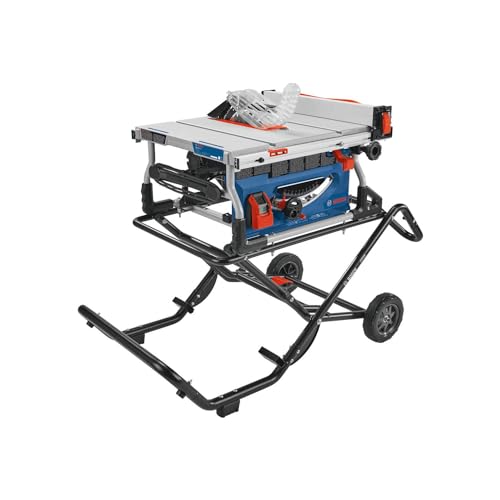
The Bosch GTS15-10 is what happens when engineers actually use tools. The 32-1/8″ rip capacity is best-in-class. The gravity rise stand? Chef’s kiss—one foot pedal and this 91-pound beast wheels around like a suitcase.
The rack-and-pinion fence is buttery smooth. The soft-start motor doesn’t try to yank your arm off at startup. And the ClampZone feature—basically a secondary work surface for small parts—is genuinely useful, not gimmicky.
The downsides? It’s expensive. The dust port is a weird 2.23″ size that doesn’t play nice with standard shop vacs. And at 91 lbs, “portable” is relative.
The verdict: If you’re serious about woodworking and want one saw to grow with, this is it. But at $649, you’re in upgrade territory. Save up or grab the Ridgid and put the $320 difference toward lumber.
Aggregated rating: 4.7/5 (1,350 reviews)
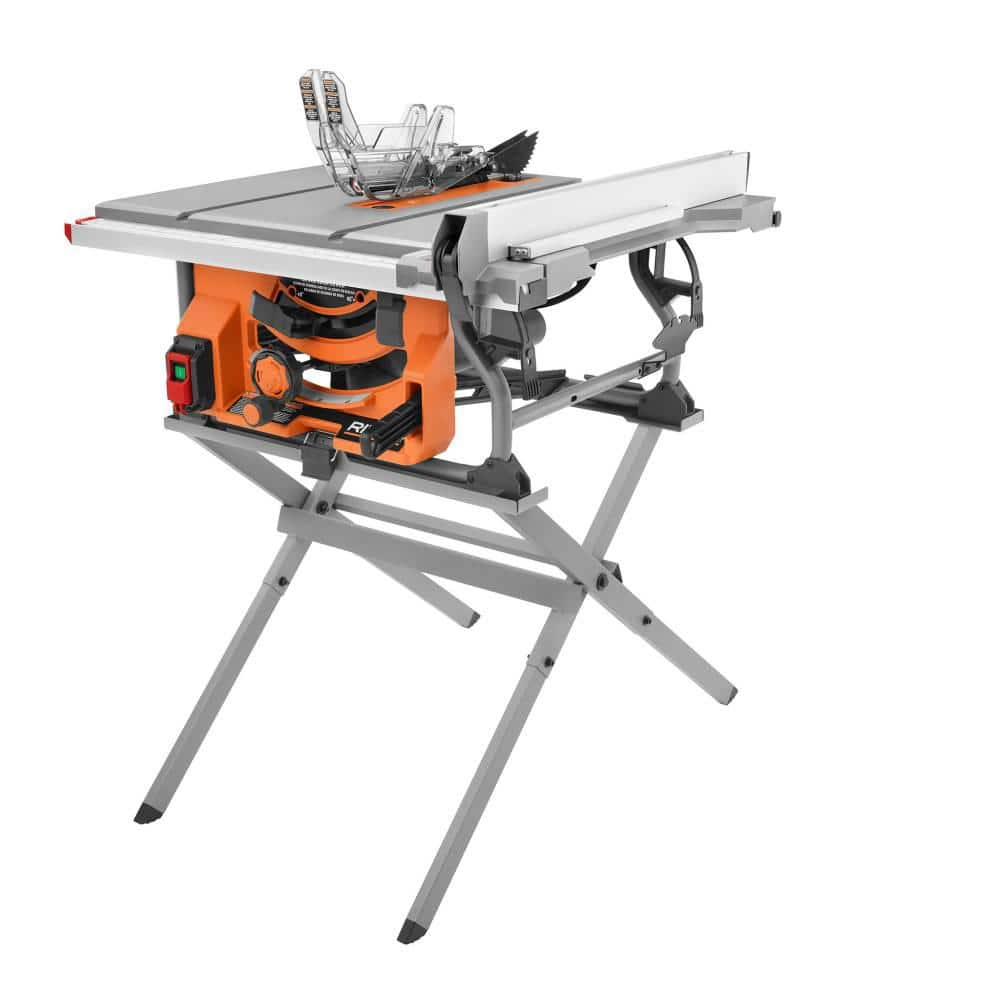
Ridgid R4518 — Best Budget, DIY Sweet Spot ($329)
Let me cut to the chase: at $329 with a folding stand included, the Ridgid R4518 is the value champion. That lifetime service agreement (LSA) means if anything breaks, Ridgid fixes it. Forever. Register it within 90 days or you’re hosed.
You get a 10″ blade, 27″ rip capacity, dado compatibility, and a 4-second blade brake. That’s a hell of a package for the money.
But… corners were cut. The miter gauge is flimsy plastic. The fence has a plastic end piece that can affect squareness. And some units need TLC out of the box to get everything aligned.
The verdict: This is THE saw for budget DIYers. It’ll build your deck, your cabinets, and your furniture. Just know you’re trading some refinement for that price tag. Set it up carefully, and it’ll serve you for years.
Aggregated rating: 4.5/5 (1,800 reviews)
DeWalt DWE7485 — Best Compact ($299)

The DeWalt DWE7485 is the “I need a table saw but I drive a Civic” solution. At 46 lbs, you can literally carry this with one hand. The metal roll cage base takes abuse. The rack-and-pinion fence is the same system DeWalt uses on their $600+ saws.
But that 8-1/4″ blade limits you to 2-9/16″ cutting depth. No dado capability. And you still need a stand (add $80-150).
The verdict: Perfect for trim carpenters, apartment dwellers, and anyone who values portability over raw capacity. If you’re cutting mostly plywood and 2x material, this is plenty. Just don’t try to resaw 4x4s.
Aggregated rating: 4.8/5 (3,500 reviews)
DeWalt DCS7485B — Best Cordless ($379 bare, $499 kit)

Cordless table saws used to be a joke. The DCS7485B isn’t funny—it’s legitimately impressive. The 60V FlexVolt platform delivers corded power without the cord. Same rack-and-pinion fence as the DWE7485. Metal roll cage. 48 lbs with battery.
Runtime? On a 9Ah battery, you’ll get 200-300 linear feet of ripping through plywood. That’s a full day of trim work. The 6Ah battery that comes in the $499 kit is adequate, but pros run 9Ah or 12Ah.
The verdict: If you’re a trim carpenter, remodeler, or work sites without reliable power, this is your saw. Everyone else should save $80 and get the corded version. Batteries aren’t cheap, and this thing drinks them.
Aggregated rating: 4.7/5 (2,050 reviews)
Makita 2705 — The Upgrade Pick ($549)
The Makita 2705 is a contractor-grade saw disguised as a jobsite model. The electric brake stops the blade in seconds—a safety feature that’s surprisingly rare. Full 10″ blade. Dado capability. Tool-less blade guard adjustments.
At 60 lbs, it’s heavier than compact saws but still manageable. The precision-machined table is flatter than competitors. The motor doesn’t bog down in hardwood.
Downsides: Stand sold separately. Cast housing can feel fragile. And that $549 price is bare tool—add $100+ for a decent stand.
The verdict: If you’re serious about furniture making or cabinet work, this is worth the premium. The electric brake alone might save a finger. But for casual DIY? The Ridgid gives you 90% of the capability for 60% of the price.
Aggregated rating: 4.6/5 (1,250 reviews)
Metabo HPT C10RJ — Best Value Full-Feature ($549)
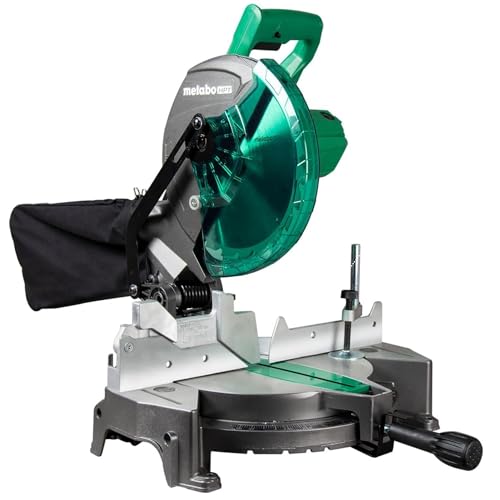
Formerly Hitachi, Metabo HPT makes the most feature-packed saw for the money. Thirty-five inches of rip capacity—the widest here. Soft-start motor. Electric brake. Included outfeed support (seriously, this is huge). Fold-and-roll stand. Anti-kickback pawls.
At $549, you’re getting Bosch-level features for less money. Watch for sales—this saw frequently drops to $239-299, at which point it’s an absolute steal.
The catch? The rack-and-pinion mount is plastic. The packaging sucks—inspect carefully for shipping damage. And some units have an oval blade insert that’s hard to match for dado work (get the C10RJS model instead).
The verdict: Feature-for-dollar, this is the best value in the roundup. If you can catch it on sale, buy immediately. At full price, it’s still competitive with the Bosch and Makita.
Aggregated rating: 4.5/5 (2,550 reviews)
Specs Comparison Table
| Spec | Bosch GTS15-10 | Ridgid R4518 | DeWalt DWE7485 | DeWalt DCS7485B | Makita 2705 | Metabo C10RJ |
|---|---|---|---|---|---|---|
| Blade | 10″ | 10″ | 8-1/4″ | 8-1/4″ | 10″ | 10″ |
| Rip Capacity | 32-1/8″ | 27″ | 24.5″ | 24″ | 25″ | 35″ |
| Depth of Cut (90°) | 3-9/16″ | 3-1/2″ | 2-9/16″ | 2-1/2″ | 3-5/8″ | 3-1/8″ |
| Weight | 91 lbs | 60 lbs | 46 lbs | 48 lbs | 60 lbs | 90 lbs |
| Blade Brake | Yes | Yes | Yes | No | Yes | Yes |
| Dado Capable | Yes | Yes | No | No | Yes | Yes |
| Soft Start | Yes | No | No | No | No | Yes |
| Stand Included | Yes (gravity rise) | Yes (folding) | No | No | No | Yes (fold/roll) |
| Price | $649 | $329 | $299 | $379 bare | $549 | $549 |
DIY Projects: What Each Saw Can Handle
Ripping Plywood (Sheets & Subfloor)
Best picks: Bosch GTS15-10, Metabo C10RJ
Ripping full 4×8 sheets requires rip capacity and outfeed support. The Bosch’s 32″ capacity and gravity rise stand make this almost enjoyable. The Metabo’s included outfeed support prevents the dreaded sheet-drop that ruins cuts.
The Ridgid can handle it too, but you’ll need roller stands or a helper. The compact DeWalts max out at 24.5″—doable, but you’ll be precutting or flipping the sheet.
Building Furniture (Tables, Beds, Bookshelves)
Best picks: Makita 2705, Bosch GTS15-10, Ridgid R4518
Furniture needs precision and dado capability for joinery. The Makita’s flat table and electric brake make precise cuts safer. The Ridgid’s dado stack compatibility lets you cut shelf grooves. The Bosch handles everything but lacks the electric brake.
The compact DeWalts struggle here—no dados and limited depth of cut for thick legs or aprons.
Cabinet Making & Built-Ins
Best picks: Makita 2705, Bosch GTS15-10
Cabinet work demands accuracy. The Makita’s machined table and micro-adjust fence shine here. The Bosch’s rack-and-pinion fence is equally precise. Both have dado capability for rabbets and dado joints.
The Ridgid works but requires more fussing with fence alignment. The Metabo is capable but the plastic rack-and-pinion can introduce slop over time.
Dado Cuts (Shelf Slots, Joinery)
Compatible: Ridgid R4518, Makita 2705, Bosch GTS15-10, Metabo C10RJ
Not Compatible: DeWalt DWE7485, DeWalt DCS7485B
If dados are in your future, skip the compact DeWalts. The other four all handle standard dado stacks. The Makita and Bosch have the most stable platforms for clean dados.
Don’t need a full table saw? If you primarily cut sheet goods and don’t have space for a stationary saw, consider a track saw instead. Track saws deliver table-saw accuracy on plywood and panels without the footprint.
Safety: Don’t Learn This the Hard Way
Kickback: What It Is and How to Prevent It
Kickback happens when the kerf (the cut) closes behind the blade, pinching the wood. The blade grabs the workpiece and fires it back at you—usually at face/chest height. It happens fast. It hurts. Sometimes it kills.
Prevention:
1. Use the riving knife. Every saw here has one. Keep it installed and aligned with the blade.
2. Don’t stand directly behind the cut. Stand to the side.
3. Use a push stick. Keep your hands 6+ inches from the blade.
4. Support the workpiece. Unsupported wood can twist and bind.
5. Make sure the blade is sharp. Dull blades create friction and heat, increasing kickback risk.
Blade Guards: Annoying But Necessary
Yes, blade guards get in the way. Yes, everyone removes them. No, you shouldn’t.
The blade guard prevents hand-to-blade contact and contains dust. Learn to work with it. The Makita and Bosch have tool-less guard adjustments—use them.
Push Sticks: Your New Best Friend
Buy a pack of push sticks. Use them for every cut narrower than 6 inches. When you’re tired and rushing on cut #47, that’s when accidents happen. Push sticks cost $5. Reattaching fingers costs way more.
Dust Collection: Not Just for Cleanliness
Sawdust on the table causes wood to slide unpredictably. Every saw here has a dust port—use it. A shop vac with a 2-1/2″ hose fits most of these saws. The Bosch’s weird 2.23″ port needs an adapter (and yes, that’s annoying).
Frequently Asked Questions
Q: Can I cut aluminum or plastic with these saws?
A: Yes, with the right blade. Use a non-ferrous metal blade for aluminum. For plastic, a fine-tooth woodworking blade works. Clean the table afterward—aluminum chips corrode cast iron.
Q: Do I need a stand?
A: Technically no, practically yes. Cutting at floor level sucks. The Ridgid and Bosch include stands. For the DeWalts and Makita, budget $80-150 for a decent stand or build one.
Q: What’s the deal with “jobsite” vs “contractor” vs “cabinet” saws?
A: Jobsite saws are portable (what we’re reviewing). Contractor saws are heavier, more accurate, and semi-portable. Cabinet saws are permanent shop fixtures weighing 400+ lbs with 3+ HP motors. For DIY, jobsite or contractor saws are plenty.
Q: Can I use a dado blade on the DeWalt DWE7485?
A: No. The arbor isn’t long enough and the motor housing interferes. If you need dados, get the DWE7491 (different model) or choose a different saw.
Q: How do I get the Ridgid Lifetime Service Agreement?
A: Register online within 90 days of purchase. Keep your receipt. If you miss the window, you get a standard 3-year warranty instead. Don’t sleep on this—the LSA is genuinely valuable.
Q: Should I buy refurbished to save money?
A: For the Ridgid and DeWalts, maybe. Factory refurbished from authorized dealers is usually fine. Avoid sketchy eBay listings. For the Bosch and Makita, buy new—the precision matters.
Q: What’s the best blade to upgrade to?
A: The stock blades are adequate. Upgrade to a Freud Diablo or Forrest Woodworker II for cleaner cuts. For general use, a 40-tooth combination blade balances ripping and crosscutting. For more recommendations, check out our best miter saws for DIY guide.
Final Verdict: Which One Should You Buy?
If you want the absolute best and have the budget: Bosch GTS15-10. The rack-and-pinion fence and gravity rise stand are worth the premium if you’ll use this regularly.
If you want maximum value: Ridgid R4518. At $329 with a stand and lifetime warranty, it’s the sweet spot for 90% of DIYers.
If space is tight: DeWalt DWE7485. It fits in a closet and still handles most projects.
If you’re working without power: DeWalt DCS7485B with a 9Ah battery. Freedom has a price, but for some jobs it’s worth it.
If you want features without the Bosch price: Metabo HPT C10RJ. Watch for sales—when it hits $299, it’s unbeatable.
If precision is paramount: Makita 2705. The electric brake and machined table justify the cost for serious woodworkers.
Where to Buy
[AFFILIATE LINK PLACEHOLDERS – INSERT BEFORE PUBLISHING]
| Saw | Amazon | Home Depot | Lowest Price Seen |
|---|---|---|---|
| Bosch GTS15-10 | Buy Now on Amazon | Buy Now on Amazon | $649 |
| Ridgid R4518 | N/A (HD Exclusive) | — | $329 |
| DeWalt DWE7485 | — | Buy Now on Amazon | $299 |
| DeWalt DCS7485B | Buy Now on Amazon | Buy Now on Amazon | $379 bare |
| Makita 2705 | Buy Now on Amazon | Check HD | $549 |
| Metabo HPT C10RJ | Buy Now on Amazon | Check Lowe’s | $239 (sale) |
Prices fluctuate. We update this monthly, but check current pricing before you buy.
Questions? Drop a comment below or hit us up on social. We actually read and respond. And if you found this helpful, share it with that buddy who’s still trying to rip plywood with a circular saw and a prayer.
Now go build something.
Track Saw vs Table Saw: A table saw wins for repeatable rip cuts and dados in the workshop. But for breaking down full 4×8 sheet goods without a big footprint, a track saw with a guide rail matches table-saw precision at half the space. See our Best Track Saws 2026 guide for top picks.
Power Tool Insider is reader-supported. When you buy through links on our site, we may earn an affiliate commission at no extra cost to you. We only recommend tools we’ve researched and would use ourselves.
Power Tool Insider is reader-supported. When you buy through links on our site, we may earn an affiliate commission at no extra cost to you. This doesn’t affect our recommendations — we only recommend tools we’d actually use. Full disclosure.