
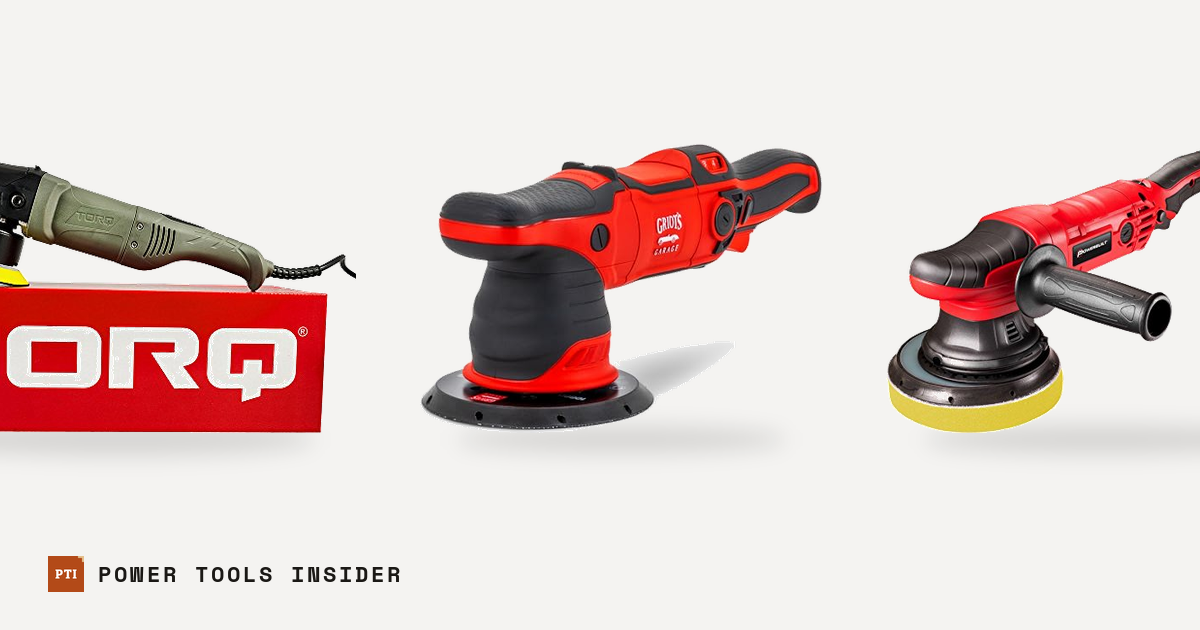
A dual-action polisher is the safest power tool for fixing swirl marks, oxidation, and light scratches on your car’s paint. Unlike a rotary buffer, a DA polisher spins and oscillates at the same time, which spreads the heat out and makes it nearly impossible to burn through clear coat. That’s why it’s the tool nearly every detailer hands a beginner first.
We pulled current prices and specs through the Amazon Creators API and matched them against what actually matters in the garage: orbit throw, motor wattage, balance, and whether the thing bogs down when you lean on it. Below are five DA polishers worth buying in 2026, from a $50 weekend kit to a pro-grade machine. If you’re setting up a garage from scratch, our auto and garage tools hub covers the rest of the gear you’ll want next to it.
Quick Pick: Best Dual-Action Polishers 2026
| Polisher | Best For | Orbit Throw | Price | Buy |
|---|---|---|---|---|
| Griot’s Garage G9 | Best Overall | 9mm | around $180 | Buy Now |
| Chemical Guys TORQ 10FX | Best with Digital Control | 8mm | around $215 | Buy Now |
| Powerbuilt 240053 | Best Value Long-Throw | 12mm | around $100 | Buy Now |
| SPTA DAPSET-US Kit | Best Starter Kit | Standard | around $90 | Buy Now |
| AVID POWER AEP176 | Best Budget | Standard | around $50 | Buy Now |
Prices reflect Amazon listings at the time of writing and move around, especially during sale events. Check the live price before you buy.
1. Griot’s Garage G9 (10901): Best Overall
The G9 is the polisher most detailers point a first-timer toward, and for good reason. It runs a 1000-watt motor with a 9mm orbit throw, which sits in the sweet spot: aggressive enough to knock out real swirls, gentle enough that you won’t damage paint while you’re learning. The 6-inch vented backing plate and fan-cooled counterbalance keep it smooth even when you press into a panel.
What sells it long-term is the constant-speed electronics. Lean on the pad and the G9 holds its OPM instead of bogging down, so your correction stays consistent across a panel. Six speed settings run 2000 to 6400 OPM, and the dial works for left or right-handed users. It also converts to a 5-inch pad system with an optional backing plate, handy for tight areas like mirrors and pillars.
| Motor | 1000 watts |
| Orbit Throw | 9mm |
| Backing Plate | 6 inch (5 inch optional) |
| Speed Range | 2000-6400 OPM, 6 settings |
| Cord | 10 ft quick-connect |
- 9mm throw hits the safe-but-effective sweet spot for beginners and pros
- Constant-speed electronics hold OPM under pad pressure
- Well-balanced with a comfortable double-shot rubber grip
- Converts to a 5-inch pad system for tight panels
- Pads and backing plate sold separately, so budget extra
- 9mm throw is slower on heavy correction than a 12mm long-throw
2. Chemical Guys TORQ 10FX (BUF_501): Best with Digital Control
The TORQ 10FX is the polisher for people who want to dial in an exact speed and forget about it. A 700-watt motor drives an 8mm orbit, and the standout feature is the onboard digital display: you set a precise speed number instead of guessing where a printed dial lands. For repeatable work across multiple panels, that consistency matters.
The 8mm throw is a touch gentler than the G9’s 9mm, which makes the 10FX forgiving on softer single-stage paint and edges. Chemical Guys built in mechanical safety features that help prevent damage on sensitive areas, and the updated grip with balanced weight makes longer sessions easier on your wrist. It’s the priciest standalone tool here, but the digital control and build quality justify it for detailers who polish often.
| Motor | 700 watts |
| Orbit Throw | 8mm |
| Speed Control | Digital display, variable |
| Pad Sizes | Switchable |
| Safety | Built-in mechanical protection |
- Digital speed display gives exact, repeatable control
- 8mm throw is forgiving on soft paint and edges
- Balanced, ergonomic grip for long sessions
- Built-in safety features reduce burn risk
- Most expensive standalone polisher on this list
- 700 watts is lower than the G9, so heavy correction takes more passes
3. Powerbuilt 240053: Best Value Long-Throw
If you have real correction work ahead of you and a tight budget, the Powerbuilt 240053 is the smart buy. Its 12mm long-throw orbit moves more pad per revolution than the 8 to 9mm machines above, so it cuts heavier defects in fewer passes. An 840-watt, 7-amp motor pushes it, and an electronic speed control module delivers forced rotation and holds speed regardless of pad pressure.
Six speed settings run 2100 to 5000 OPM with a soft-start so it doesn’t lurch on power-up. Rubber palm and hand grips plus a reversible side handle make it workable for lefties and righties. The trade-off with any long-throw machine is that 12mm is less forgiving on tight curves and edges than a short-throw, so it rewards a steady hand. For the money, the performance per dollar here is hard to beat.
| Motor | 840 watts, 7 amp |
| Orbit Throw | 12mm long-throw |
| Speed Range | 2100-5000 OPM, 6 settings |
| Speed Control | Electronic, forced rotation |
| Start | Soft start |
- 12mm long-throw cuts heavier defects in fewer passes
- Electronic forced rotation holds speed under load
- Soft start and reversible handle
- Strong correction for around $100
- Long throw is less forgiving on tight curves and edges
- Tops out at 5000 OPM, lower than the premium machines
4. SPTA DAPSET-US Kit: Best Starter Kit
The SPTA DAPSET-US is the buy for someone who owns zero detailing gear and wants to start tomorrow. It’s a 750-watt, 6.5-amp dual-action polisher bundled with nearly everything you need: coarse and fine compound, 5-inch and 6-inch foam and wool pads, sanding discs, a D-handle and side handle, spare carbon brushes, and a carry kit. Buying those accessories separately would eat most of the price difference versus a bare tool.
The polisher itself has a 6-speed dial running 2000 to 5200 OPM with constant-power electronics for a stable, smooth start. It’s a standard-throw machine, so it’s gentle and beginner-friendly rather than a fast corrector. The included spare carbon brushes are a nice touch that hints at expected wear, but for a first polisher that you’ll use a few times a year, this kit removes every excuse not to start.
| Motor | 750 watts, 6.5 amp |
| Orbit Throw | Standard dual-action |
| Speed Range | 2000-5200 OPM, 6 settings |
| Pad Sizes | 5 inch and 6 inch included |
| Kit | Compounds, pads, sanding discs, handles |
- Complete kit: compounds, pads, sanding discs, two handles
- Constant-power electronics for a smooth start
- Includes spare carbon brushes
- Everything to start for around $90
- Standard throw, so slower on heavy correction
- Bundled pads are entry-grade and worth upgrading later
5. AVID POWER AEP176: Best Budget
At around $50, the AVID POWER AEP176 is the cheapest way to get a real dual-action polisher in your hands, and it still comes with pads. It’s a 6-level variable-speed machine running 2700 to 6500 OPM, with both 5-inch and 6-inch backing plates and foam pads in the box. Like every DA, it carries a much lower risk of burning paint than a rotary, which is exactly what a first-timer wants.
The adjustable D-handle locks into five positions and the rubberized body gives you a non-slip grip. It’s a standard-throw polisher built to a price, so it doesn’t have the constant-speed electronics or build quality of the G9 or 10FX, and it can bog down a bit under hard pressure. But for occasional waxing, light swirl removal, and learning the technique without spending real money, it punches above its price.
| Model | AEP176 |
| Orbit Throw | Standard dual-action |
| Speed Range | 2700-6500 OPM, 6 levels |
| Pad Sizes | 5 inch and 6 inch included |
| Handle | 5-position adjustable D-handle |
- Cheapest real DA polisher here, around $50
- Comes with 5-inch and 6-inch plates and pads
- 5-position D-handle and non-slip body
- Low burn risk, friendly for first-timers
- No constant-speed electronics, can bog under pressure
- Build quality is entry-level versus the premium picks
How to Choose a Dual-Action Polisher
The specs that actually change how a DA polisher performs are simpler than the marketing suggests. Focus on these.
Orbit Throw
This is the distance the pad travels in its orbit, and it’s the single most important number. Short-throw (8 to 9mm) machines like the G9 and TORQ 10FX are gentler and more forgiving, ideal for finishing and for anyone still learning. Long-throw (12mm and up) machines like the Powerbuilt cut faster on heavy correction but demand a steadier hand near edges. If you only buy one, a 9mm throw covers the most ground safely.
Motor Power and Speed Control
Wattage matters less than whether the motor holds its speed under load. A polisher with constant-speed or forced-rotation electronics keeps cutting consistently when you press into a panel; a cheap one slows down and leaves uneven results. That stability is the real difference between the G9 and a bargain machine.
Pad Size and What’s Included
Most DA polishers run 5-inch or 6-inch pads. Smaller pads reach tight areas and concentrate pressure; larger pads cover panels faster. Kits like the SPTA and AVID POWER include pads and compound, which saves real money on a first purchase. Premium tools like the G9 often sell bare, so factor pads and a backing plate into the budget.
Why a DA, Not a Rotary
A rotary buffer spins on a single axis and generates heat fast, which corrects aggressively but can burn through clear coat in seconds in the wrong hands. A dual-action polisher spins and oscillates at once, spreading heat and dramatically lowering the risk of damage. For DIYers and most pros, the DA is the right tool for paint correction.
Frequently Asked Questions
Can a dual-action polisher remove deep scratches?
A DA polisher removes swirl marks, oxidation, water spots, and light-to-moderate scratches that haven’t gone through the clear coat. If your fingernail catches in a scratch, it’s likely too deep for polishing alone and will need touch-up or wet sanding first.
What orbit throw should a beginner choose?
Start with an 8 to 9mm throw, like the Griot’s Garage G9 or Chemical Guys TORQ 10FX. Short-throw machines are forgiving and far less likely to damage edges or thin paint while you learn. Move to a 12mm long-throw later if you take on heavy correction.
Do I need different pads for cutting and finishing?
Yes. Pair a more aggressive cutting compound and a firmer pad to remove defects, then switch to a soft finishing pad and a fine polish to refine the gloss. Many kits, like the SPTA, include both coarse and fine compounds to get you started.
Will a DA polisher burn my paint?
It’s very hard to burn paint with a dual-action polisher because the oscillating motion spreads heat out. Keep the pad moving, avoid sitting in one spot at high speed, and don’t let the backing plate edge dig into a panel. That’s why DAs are the recommended tool for beginners.
How long does it take to polish a whole car?
A single-stage polish on an average sedan takes most DIYers three to five hours, longer for the first time. Heavy correction with a cutting pass and a finishing pass can stretch to a full day. A long-throw machine like the Powerbuilt shaves time on the cutting stage.
Power Tools Insider is reader-supported. When you buy through links on our site, we may earn an affiliate commission at no extra cost to you. Prices and availability are accurate as of the date of publishing but are subject to change.