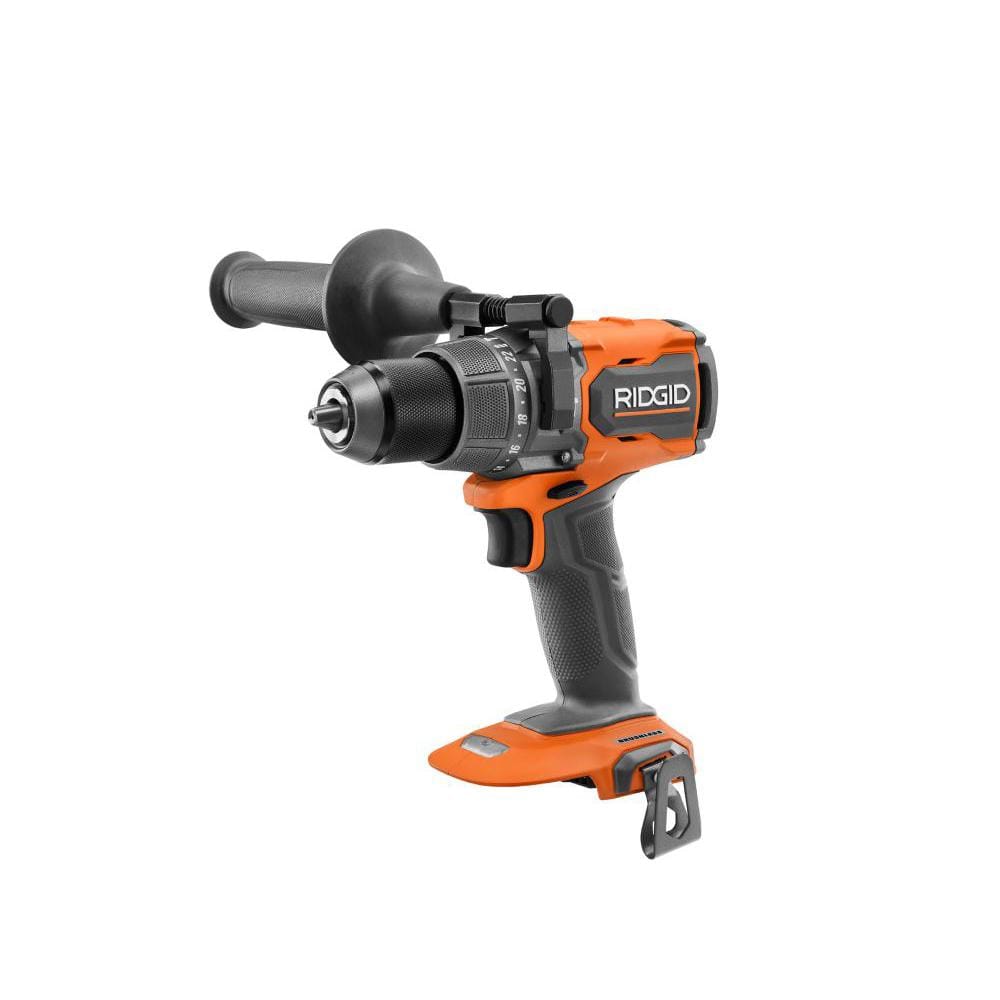
Best Cordless Drills for Beginners 2026: Your First Drill Done Right
Your first cordless drill is like your first car: Get it wrong and you’ll curse every project. Get it right and it’ll teach you everything you need to know before upgrading.
After watching countless beginners struggle with underpowered budget drills OR waste money on overkill pro models, here’s the truth: the sweet spot for your first drill is $100-200. You get enough power to actually learn, enough features to avoid frustration, and enough brand support that you’re not stuck with an orphaned battery system.
Here are the two drills that hit that mark — and why they’re the right training wheels for real DIY work.
| Award | Model | Price | Rating | Why We Picked It | Buy |
|---|---|---|---|---|---|
| Best Overall | DeWalt DCD771C2 | ~$129 | 4.8/5 | Industry-standard beginner drill — 300 in-lbs, compact, impossible to outgrow quickly | Buy Now |
| Best Brushless | Makita XFD131 | ~$169 | 4.8/5 | 440 in-lbs torque, brushless motor, 21-position clutch for precision | Buy Now on Amazon |
Why These Two Drills?
We deliberately kept this list short. Most “best drills for beginners” articles recommend 8-10 models, which defeats the entire purpose of helping beginners choose. Analysis paralysis is real.
Here’s the actual decision:
- DeWalt DCD771C2 if you want the most popular beginner drill in America (there’s a reason every Home Depot demo uses this model)
- Makita XFD131 if you’re willing to spend $40 more for brushless efficiency and more torque
- Under-$100 options if budget is tight (but read our warnings about power/durability trade-offs)
Everything else is noise. Let’s dig into why.
DeWalt DCD771C2 20V MAX — Best Overall for Beginners

Price: ~$129 | Rating: 4.8/5 (48,833 reviews)
The DeWalt DCD771C2 is the Toyota Camry of cordless drills — not the flashiest, not the cheapest, but absolutely the right choice for 80% of first-time buyers.
With 300 in-lbs of torque, this drill handles everything a beginner needs to tackle: assembling furniture, hanging shelves, drilling pilot holes in framing lumber, driving deck screws. It won’t bore through concrete or drive 6-inch lag bolts, but you’re not doing that on day one anyway.
The 20V MAX battery system is DeWalt’s most popular platform. When you’re ready to expand (circular saw, impact driver, leaf blower), you’ve got 200+ tools that share these batteries. That’s the real value of choosing DeWalt as your first brand.
What makes this beginner-friendly:
- Compact size: 7.5 inches front-to-back means you can fit it in tight spaces (between studs, inside cabinets) without the drill body blocking your view
- 2-speed transmission: Low gear (0-450 RPM) for driving screws and high torque. High gear (0-1,500 RPM) for drilling holes. The switch is obvious and tactile — you can’t screw it up
- 16-position clutch: This is your training wheels for not stripping screws. Start at setting 5 for drywall screws, setting 10 for deck screws, and you’ll learn torque control by feel
- Comes with everything: Two 1.3Ah batteries, charger, and a contractor bag. You’re drilling 30 seconds after opening the box
Pros
- Most widely recommended beginner drill for a reason — proven track record
- Huge 20V MAX ecosystem (200+ compatible tools)
- Compact 7.5-inch length fits tight spaces
- 48,000+ reviews = extensive real-world validation
- Two batteries included (swap while one charges)
Cons
- Brushed motor (less efficient than brushless, but fine for beginners)
- 1.3Ah batteries are small (expect 20-30 minutes of heavy use per charge)
- LED light placement isn’t ideal (casts shadows on some angles)
| Spec | Value |
|---|---|
| Voltage | 20V MAX |
| Torque | 300 in-lbs |
| Speed Settings | 2-speed (0-450 / 0-1,500 RPM) |
| Chuck Size | 1/2″ |
| Motor Type | Brushed |
| Weight | 3.6 lbs (with battery) |
| Clutch Settings | 16-position |
| Battery Included | Yes (2x 1.3Ah + charger) |
| LED Light | Yes |
Bottom Line: If you’re buying your first cordless drill and want the safest, most proven choice, this is it. 48,000+ positive reviews don’t lie. You’ll learn proper drill technique, build your DeWalt battery collection, and resell it for $60-80 when you upgrade to the brushless XR model in 2-3 years.
Makita XFD131 18V LXT — Best Brushless Option

Price: ~$169 | Rating: 4.8/5 (2,251 reviews)
The Makita XFD131 is what you buy when you’re 90% sure you’re going to love DIY work — and you want a drill that won’t feel like a toy after 6 months.
With 440 in-lbs of torque (47% more than the DeWalt), this drill punches well above its compact size. Brushless motor tech means 50% longer runtime per charge and cooler operation under load. If you’re planning to build a deck, install shelving in a whole house, or tackle furniture builds regularly, the extra $40 pays for itself in battery savings and durability.
Makita’s 18V LXT platform isn’t as massive as DeWalt’s 20V MAX, but it’s deep in the tools that matter: saws, sanders, impact drivers, outdoor power equipment. For woodworkers and serious DIYers, many pros actually prefer Makita.
What makes this beginner-friendly:
- Brushless motor: More power + longer runtime + less heat = a drill that won’t slow down mid-project
- 21-position clutch: Finer control than DeWalt’s 16 settings. You’ll feel the difference when driving screws into hardwood or drywall
- Dual LED lights: Better shadow-free illumination than single-LED designs
- Compact 7.5-inch design: Same length as the DeWalt, but packs more torque
Pros
- Brushless motor = 50% longer runtime and more power efficiency
- 440 in-lbs torque handles tougher jobs (lag screws, thick lumber)
- 21-position clutch for finer torque control
- Two 2.0Ah compact batteries (longer runtime than DeWalt’s 1.3Ah)
- Dual LED lights eliminate shadows
- Highly regarded 18V LXT battery platform
Cons
- $40 more than DeWalt DCD771C2
- Smaller battery ecosystem than DeWalt (still large, just not as massive)
- Teal color scheme isn’t for everyone (this is petty but people care)
| Spec | Value |
|---|---|
| Voltage | 18V LXT |
| Torque | 440 in-lbs |
| Speed Settings | 2-speed (0-600 / 0-1,900 RPM) |
| Chuck Size | 1/2″ |
| Motor Type | Brushless |
| Weight | 3.3 lbs (with battery) |
| Clutch Settings | 21-position |
| Battery Included | Yes (2x 2.0Ah compact + charger) |
| LED Light | Dual LED |
Bottom Line: If you’re willing to spend $169 instead of $129, the brushless motor and higher torque make this drill a better long-term investment. You’ll outgrow a budget drill in a year. You won’t outgrow this one for 5+ years. The Makita LXT platform is also beloved by woodworkers — if that’s your direction, this is your drill.
Buying Guide for First-Time Drill Buyers
Understanding Voltage: Why 18V/20V is the Sweet Spot
Drills come in 12V, 18V/20V, and 24V/40V+ flavors. Here’s the reality:
- 12V drills are great for tight spaces and light duty (picture hanging, furniture assembly). They’re not great for learning because you’ll hit their limits fast and wonder if you’re doing something wrong (you’re not — the drill is just weak).
- 18V/20V drills (same thing — DeWalt calls it 20V MAX, Makita calls it 18V LXT, it’s marketing) give you enough power to drill into framing lumber, drive 3-inch deck screws, and tackle 90% of DIY projects. This is where beginners should start.
- 24V+ drills are for pros who need maximum power. Beginners don’t need this much drill.
Bottom line: Start with 18V/20V. You’ll learn what power feels like, and you won’t outgrow it anytime soon.
Brushed vs Brushless: Do Beginners Need Brushless?
Short answer: Not required, but nice to have.
Brushless motors are more efficient (longer battery life), more powerful (more torque), and more durable (no carbon brushes to wear out). But they cost $30-50 more.
Get brushed if: You’re budget-conscious and doing occasional DIY projects (furniture assembly, hanging shelves, basic repairs).
Get brushless if: You’re planning bigger projects (building a deck, installing cabinets, lots of woodworking) or want the drill to last 5+ years without feeling underpowered.
Kit vs Bare Tool: What’s Included?
Drills are sold two ways:
- Kit: Drill + battery(ies) + charger, usually in a case. This is what beginners should buy. You can’t use a bare tool without batteries.
- Bare tool: Just the drill, no battery or charger. For people who already own batteries in that brand’s ecosystem.
Both drills we recommend are KITS. You’re opening the box and drilling immediately. Don’t buy bare tools as a beginner — you’ll end up spending $80+ on batteries and chargers anyway.
Battery Platform Lock-In: Why Your First Drill Matters
Here’s the hidden cost of cordless tools: once you buy into a battery platform (DeWalt 20V MAX, Makita 18V LXT, Milwaukee M18), you’re financially incentivized to stay in that ecosystem.
Why? Because if you buy a DeWalt drill, then a Milwaukee circular saw, you now need two sets of batteries and chargers. It’s cheaper and more convenient to buy your second tool in the same brand.
Pick your first drill wisely — you’re not just buying a drill, you’re choosing your battery ecosystem for the next 5-10 years.
Must-Have Accessories for Your First Drill
Don’t go crazy buying accessories on day one, but these three things will save you frustration:
- Impact-rated driver bit set — Regular bits strip out fast. Get a set with Phillips, square drive, and Torx bits. (Our impact bit guide)
- Drill bit set — You need twist bits for wood and metal. A basic 21-piece set covers 90% of holes. (Our drill bit set guide)
- Extra battery (optional but smart) — If you bought the 1-battery DeWalt kit, grab a second battery. Swapping while one charges beats waiting 90 minutes mid-project.
Frequently Asked Questions
What voltage drill should a beginner buy?
18V or 20V MAX (same thing, different branding). This voltage class gives you enough power to drill into framing lumber, drive 3-inch deck screws, and handle 90% of DIY projects without feeling underpowered. 12V drills are too weak for learning proper technique, and 24V+ drills are overkill for beginners.
Do I need a brushless drill as a beginner?
Not required, but worth the extra $30-50 if you plan to use the drill regularly. Brushless motors offer 50% longer battery life, more torque, and better durability. The DeWalt DCD771C2 (brushed, $129) is perfectly fine for occasional DIY. The Makita XFD131 (brushless, $169) is better if you’re planning bigger projects or want the drill to last 5+ years without feeling weak.
How much should I spend on my first cordless drill?
$100-200 is the sweet spot for beginners. Under $100 drills work but compromise on power, battery life, and durability — you’ll outgrow them fast and wonder if you’re using them wrong (you’re not, they’re just weak). Over $200 gets you pro features you don’t need yet. The DeWalt DCD771C2 at $129 hits the perfect balance of capability, brand support, and value.
What’s the difference between a drill and an impact driver?
Drills ROTATE to drill holes and drive screws. Impact drivers ROTATE + HAMMER to drive screws faster with less wrist strain. For beginners, start with a drill — it’s more versatile (you can drill holes AND drive screws). Once you’ve built a few projects and driven 200+ screws by hand, you’ll appreciate what an impact driver does. Many people end up owning both. (Our impact driver guide)
Can I use my drill as a screwdriver?
Yes — that’s literally half of what drills do. Use the clutch settings (the numbered ring behind the chuck) to control torque. Start at a low number (5-8 for drywall, 10-12 for deck screws) and increase if the clutch slips too early. The clutch prevents you from overdriving screws and stripping heads. Learning to use the clutch properly is one of the most important beginner skills.
How long do cordless drill batteries last?
Runtime per charge: 20-60 minutes of actual work, depending on battery size and task. A 1.3Ah battery (DeWalt kit) gives you ~20-30 minutes of continuous drilling or driving. A 2.0Ah battery (Makita kit) gives you ~40-50 minutes. Heavy tasks (drilling into hardwood, driving lag bolts) drain batteries faster than light tasks (assembling furniture). Battery lifespan: 3-5 years or 500-1,000 charge cycles before capacity degrades noticeably.
Drill or impact driver — which do you actually need? If you’re building your first cordless toolkit, this is the most common question. Our Impact Driver vs Drill breakdown explains the key differences — and tells you when you need both.
Power Tool Insider is reader-supported. When you buy through links on our site, we may earn an affiliate commission at no extra cost to you. This doesn’t affect our recommendations — we only recommend tools we’d actually use. Full disclosure.
Ready to expand your tool collection? See: Best Cordless Tool Combo Kits 2026 — the most efficient way to build a complete set.