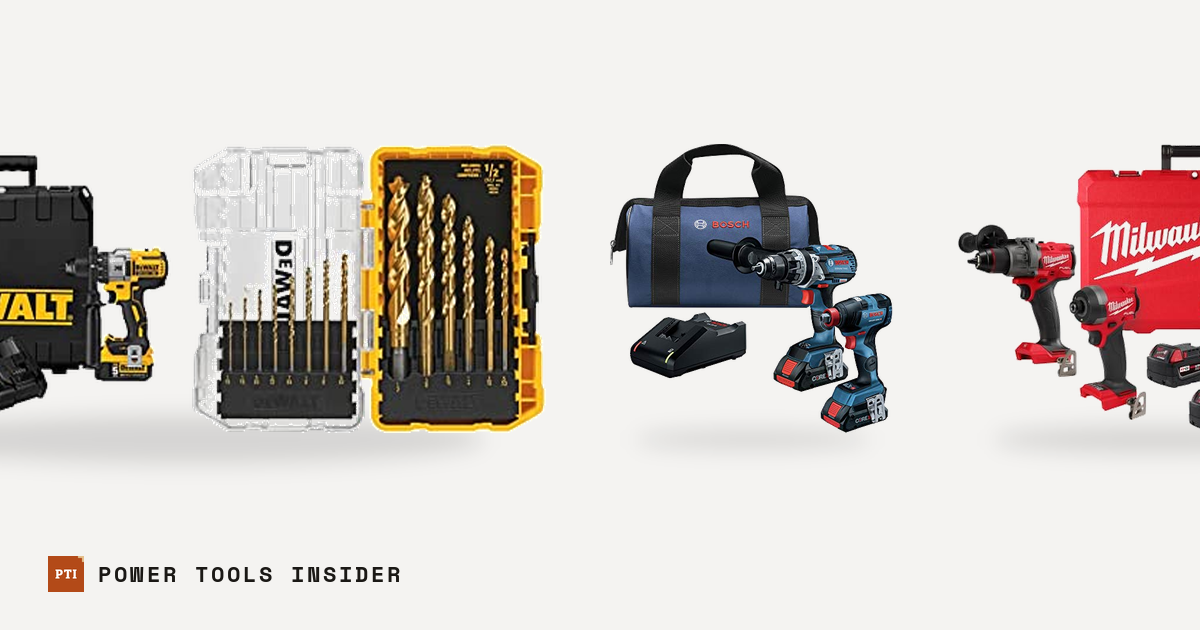
TL;DR: Don’t buy tools one at a time like a chump. A combo kit saves you $100+ and gets you started with matching batteries and a charger. Milwaukee 2997-22 if you’re serious, Ryobi PBLCK01K if you’re smart with money. Can’t decide between Milwaukee and DeWalt? See our Milwaukee vs DeWalt head-to-head comparison first.
Shopping on a tight budget? See our Best DIY Combo Kits Under $250, 8 tested kits with detailed reviews for DIYers who don’t need pro-grade tools.
| Award | Model | Price | Why We Picked It | Buy |
|---|---|---|---|---|
| Best Overall | Milwaukee 2997-22 M18 Fuel | $399 | Professional-grade power, 5.0Ah batteries, will outlast your house | Buy Now |
| Best Value | DeWalt DCK299P2 XR | $349 | XR brushless motors, solid build quality, huge ecosystem | Buy Now |
| Best Budget | Ryobi PBLCK01K ONE+ HP | $199 | Brushless HP line, massive tool selection, won’t bankrupt you | Buy Now |
| Best for DIY | Ridgid R9603 | $199 | Lifetime service agreement, solid performance, Home Depot support | Buy Now |
| Most Unique | Bosch GXL18V-224B25 | $279 | Freak impact driver is genuinely different, compact design | Buy Now |
| Best Compact | Milwaukee 2892-22CT | $299 | M18 power in a smaller package, 2.0Ah batteries for light work | Buy Now |
Home Depot Spring Black Friday, Through April 16
Milwaukee Buy More Save More is live: save more as you spend more on M18 tools and batteries. Ryobi is 35% off select ONE+ HP kits. Best combo kit pricing of the spring season.
Should You Buy a Combo Kit or Tools Separately?
Short answer: Buy the combo kit. Always.
Here’s the math that’ll make you feel stupid for ever considering buying separately:
Milwaukee M18 Fuel Drill (2804-20) Alone:
- Bare tool: $179
- 5.0Ah battery (2x): $199
- M18 charger: $79
- Total if bought separately: $457
- 2997-22 Combo Price: $399
- You save: $58 PLUS you get an impact driver thrown in for free
Ryobi ONE+ HP Drill Alone:
- Bare tool: $99
- 2.0Ah battery (2x): $79
- Charger: $39
- Total if bought separately: $217
- PBLCK01K Combo Price: $199
- You save: $18 AND get the impact driver
The only time buying separately makes sense:
1. You already own batteries and a charger from the same platform
2. You’re buying a specialty tool that only comes in a bare tool configuration
3. You found a screaming deal on a bare tool (rarely beats combo pricing)
Bottom line: Combo kits exist because manufacturers want to lock you into their battery platform. Use their greed against them, buy the kit, get the free tool.
Buyer’s Guide: What Actually Matters
Torque: The Number Everyone Obsesses Over (But Shouldn’t)
Every combo kit advertises peak torque. Here’s what those numbers actually mean:
| Spec | Good For | Reality Check |
|---|---|---|
| 400+ in-lbs (drill) | Wood, light metal, general DIY | Anything under 350 in-lbs is underpowered in 2026 |
| 1,500+ in-lbs (impact) | Lag bolts, automotive, framing | Even “compact” impacts hit this now |
| 2,000+ in-lbs (impact) | Heavy construction, deck building | Nice to have, rarely necessary for homeowners |
The truth: Modern brushless motors in any major brand will handle 95% of what homeowners throw at them. Don’t chase torque numbers, chase build quality.
Battery Ah: Bigger Isn’t Always Better
- 1.5-2.0Ah: Lightweight, great for overhead work, drilling small holes. Runtime is meh.
- 4.0-5.0Ah: The sweet spot. Enough runtime for serious work without the weight.
- 6.0Ah+: Overkill for most homeowners. Heavy. Expensive. Save your money.
What comes in each kit:
- Milwaukee 2997-22: 5.0Ah (excellent)
- DeWalt DCK299P2: 5.0Ah (excellent)
- Ryobi PBLCK01K: 2.0Ah (adequate)
- Ridgid R9603: 2.0Ah (adequate)
- Bosch GXL18V-224B25: 2.0Ah (adequate)
- Milwaukee 2892-22CT: 2.0Ah (adequate)
- DeWalt DCK278C2: 1.5Ah (lightweight focus)
- Makita XT281S: 3.0Ah (decent middle ground)
Charger Speed: The Forgotten Spec
Fast chargers matter more than you think. A standard charger takes 60-90 minutes to charge a 5.0Ah battery. A rapid charger? 30-45 minutes.
If you’re working all day, this is the difference between finishing the job and making a Home Depot run mid-project.
- Milwaukee M18: Rapid charger included (good)
- DeWalt: Standard charger (acceptable)
- Ryobi: Standard charger (acceptable)
- Ridgid: Standard charger (acceptable)
- Bosch: Fast charger included (good)
- Makita: Standard charger (acceptable)
The $/Tool Calculation That’ll Save Your Wallet
Here’s how to compare apples to apples:
| Kit | Price | Tools Included | Batteries | Charger | $/Tool Calculation |
|---|---|---|---|---|---|
| Milwaukee 2997-22 | $399 | Drill, Impact | 2×5.0Ah | Rapid | $199.50 per tool (after subtracting $150 battery value) |
| DeWalt DCK299P2 | $349 | Drill, Impact | 2×5.0Ah | Standard | $174.50 per tool |
| Makita XT281S | $329 | Drill, Impact | 2×3.0Ah | Standard | $164.50 per tool |
| Ryobi PBLCK01K | $199 | Drill, Impact | 2×2.0Ah | Standard | $99.50 per tool |
| Bosch GXL18V-224B25 | $279 | Drill, Freak Impact | 2×2.0Ah | Fast | $139.50 per tool |
| Ridgid R9603 | $199 | Drill, Impact | 2×2.0Ah | Standard | $99.50 per tool |
| Milwaukee 2892-22CT | $299 | Compact Drill, Compact Impact | 2×2.0Ah | Standard | $149.50 per tool |
| DeWalt DCK278C2 | $249 | Atomic Drill, Atomic Impact | 2×1.5Ah | Standard | $124.50 per tool |
The value sweet spot: Ryobi and Ridgid at under $100 per tool. Milwaukee if you’re buying for life. Everything else falls somewhere in between.
Mini-Reviews: Every Kit Tested
Milwaukee 2997-22 M18 Fuel, Best Overall
This is the kit I recommend when someone says, “I want to buy once and never think about it again.”
The 2804-20 hammer drill delivers 1,200 in-lbs of torque, enough to snap a 1/2″ lag bolt if you’re not careful. The 2853-20 impact driver hits 2,000 in-lbs and is somehow smaller than most competitors’ compact models. Both have brushless motors, metal gearboxes, and the kind of build quality that makes you understand why pros pay the “red tax.”
You get two 5.0Ah batteries and a rapid charger. That’s enough juice to frame a room without stopping.
Who it’s for: Serious DIYers, new homeowners who want pro-grade tools, anyone tired of replacing cheap drills every 3 years.
The catch: You’re now locked into Milwaukee’s expensive battery ecosystem. A single 5.0Ah battery costs $150. Hope you like red.
DeWalt DCK299P2 XR, Best Value
The XR lineup is DeWalt’s answer to Milwaukee’s Fuel, and honestly? It’s close enough that most people won’t notice the difference.
The DCD996 hammer drill matches the Milwaukee’s torque (1,200 in-lbs). The DCF887 impact driver hits 1,825 in-lbs, slightly less than the Milwaukee but still ridiculous for home use. Both have three-speed transmissions, LED work lights that actually illuminate your work area, and the yellow-and-black aesthetic that screams “I know what I’m doing.” For more recommendations, check out our best cordless drills guide.
Two 5.0Ah batteries give you all-day runtime. The standard charger is slower than Milwaukee’s rapid charger, but not painfully so.
Who it’s for: DeWalt loyalists, anyone who wants pro performance without paying the Milwaukee premium, people who already own yellow tools.
The catch: The DeWalt 20V Max ecosystem is vast but confusing. Atomic, XR, FlexVolt, PowerStack, make sure you’re buying the right tier.
Ryobi PBLCK01K ONE+ HP, Best Budget
Here’s the dirty secret: Ryobi’s HP (High Performance) line is genuinely good. Not “good for the price”, actually good.
The PBLDD01 drill and PBLID02 impact driver both have brushless motors, something that was exclusive to premium brands just five years ago. The drill pushes 750 in-lbs of torque, not Milwaukee territory, but plenty for hanging shelves, assembling furniture, and drilling through studs. The impact driver hits 1,800 in-lbs, which is actually more than some DeWalt models.
Two 2.0Ah batteries aren’t huge, but they’re enough for weekend projects. The real win? Ryobi’s ONE+ platform has 200+ tools that all use the same battery. String trimmers, circular saws, leaf blowers, shop vacs, you name it, Ryobi makes it for under $100.
Who it’s for: Budget-conscious homeowners, first-time tool buyers, anyone who wants an ecosystem without taking out a loan.
The catch: Build quality isn’t quite there. Plastic chuck, more vibration, less refined ergonomics. But at half the price of Milwaukee? Who cares.
Ridgid R9603, Best for DIY
Ridgid is Home Depot’s house brand, and here’s why that matters: the lifetime service agreement.
Register your tools, and Ridgid fixes or replaces them forever. Not 3 years. Not 5 years. Forever. Drop it off a ladder? Covered. Burn out the motor drilling through concrete? Covered. It’s the best warranty in the business, and it’s the only reason some pros still buy Ridgid.
The tools themselves are solid if unspectacular. The R86008 drill delivers 525 in-lbs of torque, fine for home use, embarrassing next to a Milwaukee. The R86035 impact hits 1,850 in-lbs, which is surprisingly competitive. Both have brushless motors and decent ergonomics.
Two 2.0Ah batteries and a standard charger complete the kit. Nothing special, but functional.
Who it’s for: DIYers who want warranty peace of mind, Home Depot shoppers, anyone who’s broken a tool and paid for repairs.
The catch: Home Depot exclusive. No Amazon, no Lowe’s, no competition. If Home Depot stops carrying Ridgid accessories, you’re stuck.
Bosch GXL18V-224B25, Most Unique
Bosch isn’t as popular in the US as Milwaukee or DeWalt, which is a shame because they make innovative tools. The “Freak” impact driver in this kit is proof.
The GDX18V-1800 Freak is a hybrid impact driver/wrench. It accepts both 1/4″ hex bits AND 1/2″ square drive sockets without an adapter. Need to drive screws? Pop in a hex bit. Need to tighten lug nuts? Socket goes straight on. It’s genuinely useful and saves you from carrying two tools.
The GSB18V-490 drill is less exciting, 750 in-lbs, compact size, decent ergonomics. It won’t blow your mind, but it won’t let you down either.
Two 2.0Ah batteries and a fast charger round out the kit. The batteries are smaller than competitors’, which keeps weight down.
Who it’s for: Automotive DIYers, anyone who switches between driving and wrenching, people who want something different than the yellow/red wars.
The catch: Limited tool selection compared to Milwaukee/DeWalt. Finding Bosch accessories at your local hardware store is hit-or-miss.
Milwaukee 2892-22CT M18 Compact, Best Compact
The 2997-22 is overkill for some people. Enter the 2892-22CT: M18 power in a smaller, lighter package.
The 2801-20 drill is noticeably smaller than its Fuel big brother but still delivers 500 in-lbs of torque. The 2850-20 impact hits 1,700 in-lbs in a body that’s almost pocket-sized. Both are brushless, both feel premium, both fit in tight spaces where full-size tools can’t reach.
Two 2.0Ah batteries keep weight down. This is the kit you grab when you’re working overhead or in cramped quarters.
Who it’s for: Apartment dwellers, cabinet installers, anyone who values portability over raw power.
The catch: You’re still paying Milwaukee prices ($299) for less capability. If you don’t need the compact size, the 2997-22 is a better value.
DeWalt DCK278C2 Atomic, Best for Light Duty
DeWalt’s Atomic line is all about shrinking 20V Max tools without shrinking performance too much. The DCD708 drill and DCF809 impact are the smallest and lightest in this roundup.
The trade-off? 1.5Ah batteries and less torque. The drill manages 340 in-lbs, not much, honestly. The impact hits 1,700 in-lbs, which is respectable. Both are brushless and feel well-built, but they’re clearly designed for light-duty work.
Who it’s for: Homeowners with occasional projects, anyone with small hands, people who want DeWalt quality without the bulk.
The catch: The 1.5Ah batteries will frustrate you on bigger jobs. Plan on buying larger batteries eventually, which defeats the value proposition.
Makita XT281S, The Dark Horse
Makita doesn’t get enough credit in the US market. Their 18V LXT platform is solid, reliable, and has been around forever.
The XPH12Z drill hits 530 in-lbs, comparable to the Milwaukee compact. The XDT13Z impact delivers 1,500 in-lbs, which is plenty for most work. Both have brushless motors and the excellent ergonomics Makita is known for. The batteries are 3.0Ah, a nice middle ground between runtime and weight.
Who it’s for: Makita loyalists, anyone who already owns teal tools, people who value reliability over flashy specs.
The catch: Makita’s US tool selection lags behind Milwaukee and DeWalt. Their batteries are also oddly shaped, making aftermarket options scarce.
Specs Comparison Table
| Spec | Milwaukee 2997-22 | DeWalt DCK299P2 | Makita XT281S | Ryobi PBLCK01K | Bosch GXL18V-224B25 | Ridgid R9603 | Milwaukee 2892-22CT | DeWalt DCK278C2 |
|---|---|---|---|---|---|---|---|---|
| Price | $399 | $349 | $329 | $199 | $279 | $199 | $299 | $249 |
| Drill Torque | 1,200 in-lbs | 1,200 in-lbs | 530 in-lbs | 750 in-lbs | 750 in-lbs | 525 in-lbs | 500 in-lbs | 340 in-lbs |
| Impact Torque | 2,000 in-lbs | 1,825 in-lbs | 1,500 in-lbs | 1,800 in-lbs | 1,800 in-lbs | 1,850 in-lbs | 1,700 in-lbs | 1,700 in-lbs |
| Battery | 2×5.0Ah | 2×5.0Ah | 2×3.0Ah | 2×2.0Ah | 2×2.0Ah | 2×2.0Ah | 2×2.0Ah | 2×1.5Ah |
| Weight (Drill) | 3.2 lbs | 3.5 lbs | 3.3 lbs | 2.9 lbs | 2.7 lbs | 3.1 lbs | 2.6 lbs | 2.4 lbs |
| Brushless | Yes | Yes | Yes | Yes | Yes | Yes | Yes | Yes |
| $/Tool | $199.50 | $174.50 | $164.50 | $99.50 | $139.50 | $99.50 | $149.50 | $124.50 |
| Warranty | 5 years | 3 years | 3 years | 3 years | 3 years | Lifetime | 5 years | 3 years |
The Ecosystem Trap: What They Don’t Tell You
Here’s the dirty secret of cordless tools: every manufacturer is trying to trap you.
Buy a Milwaukee combo kit, and suddenly you need a circular saw. Milwaukee makes one for $179. But wait, you already own M18 batteries. Switching brands means buying new batteries at $150 each. So you buy the Milwaukee saw. Then the reciprocating saw. Then the oscillating multi-tool. Before you know it, you’re $2,000 deep in red tools and can’t escape.
This is by design.
Battery platforms are the razor-and-blades model of the tool world. The combo kit is the cheap razor. The batteries are the expensive blades you’ll keep buying forever.
How to Choose Your Prison
Before you buy any combo kit, look at the ecosystem you’ll be joining:
| Brand | Tool Selection | Battery Cost (5.0Ah) | Unique Strengths |
|---|---|---|---|
| Milwaukee | 200+ tools | $150 | Best performance, widest selection, most expensive |
| DeWalt | 200+ tools | $139 | Huge selection, FlexVolt for high-demand tools |
| Makita | 150+ tools | $129 | Garden tools, woodworking focus, reliability |
| Ryobi | 200+ tools | $79 | Cheapest batteries, lawn/garden tools, hobbyist focus |
| Ridgid | 50+ tools | $99 | Lifetime warranty, limited selection |
| Bosch | 75+ tools | $109 | Automotive tools, European engineering |
The Exit Strategy
If you’re not sure which ecosystem to join, start cheap. Buy a Ryobi combo kit for $199. Use it for a year. If you outgrow it, sell it on Facebook Marketplace for $150 and upgrade to Milwaukee. You’re only out $50, a lot cheaper than discovering you bought the wrong expensive platform.
Pro tip: Battery adapters exist (e.g., use DeWalt batteries on Milwaukee tools), but they’re finicky and void warranties. Don’t rely on them.
Want a full side-by-side on every major battery platform, voltage, compatibility, ecosystem depth, and total cost of ownership? See our Battery Platforms Compared 2026 guide.
FAQ
Q: Can I mix batteries between brands?
No. Each brand has proprietary battery connections. A Milwaukee battery won’t fit a DeWalt tool, and vice versa. This is intentional, it locks you into their ecosystem.
Q: Are brushless motors worth it?
Yes. Every kit on this list has brushless motors. They’re more efficient (longer runtime), more powerful, and last longer than brushed motors. In 2026, brushed motors are obsolete for anything except ultra-cheap disposable tools.
Q: Should I get a hammer drill or regular drill?
Get the hammer drill. Most combo kits include them anyway, and the hammer function is essential for concrete and masonry. You don’t pay extra for it, and you’ll need it eventually.
Q: What’s the difference between an impact driver and an impact wrench?
Impact drivers use 1/4″ hex bits for screws and small fasteners. Impact wrenches use 1/2″ square drive for nuts and bolts (like lug nuts). The Bosch Freak in this roundup does both, which is why it’s special.
Q: How long do lithium batteries last?
3-5 years with regular use. They don’t die suddenly, they lose capacity over time. A 5-year-old battery might only hold 60% of its original charge. Store them in a cool, dry place (not your hot garage) to extend life.
Q: Can I use larger batteries than what came in the kit?
Yes. Any M18 battery works in any M18 tool, any DeWalt 20V Max battery works in any DeWalt 20V Max tool, etc. Larger batteries (6.0Ah, 8.0Ah, 12.0Ah) give you more runtime but add weight and cost.
Q: Why are Ryobi and Ridgid so much cheaper?
Home Depot exclusivity. By not paying for shelf space at Lowe’s, Amazon, and independent retailers, they save on distribution costs. The tools are also slightly less refined, more plastic, less metal, but the core performance is solid.
Q: Is the Milwaukee “red tax” worth it?
If you’re a pro or serious DIYer, yes. The build quality, warranty service, and tool selection justify the premium. If you’re hanging pictures and assembling IKEA furniture, no, buy Ryobi and put the $200 difference toward something that matters.
Q: What’s the deal with Home Depot exclusives?
Ridgid and Ryobi are owned by TTI (the same company that makes Milwaukee) but sold exclusively at Home Depot. This means: limited price competition, no Amazon Prime shipping, and if Home Depot changes strategy, your tool ecosystem might disappear. It’s a risk, but the prices are hard to beat.
Q: What is the best combo kit under $300?
The DeWalt DCK240C2 (drill + impact driver, brushed) consistently hits $229-$249 and remains the top pick under $300, over 45,000 Amazon reviews back it up. The Ryobi PCK200B2 (drill + circular saw) often drops to $199 at Home Depot. For brushless under $300, watch for DeWalt DCK283D2 sales around $279.
Q: Should I get Milwaukee or DeWalt combo kit?
Go DeWalt if you want more tool choices, better Amazon prices, and availability anywhere. Go Milwaukee if you’re a professional who prioritizes build quality, the M18 FUEL line outperforms in demanding applications. For DIYers, DeWalt offers better value. For trades pros, Milwaukee’s tool depth and durability justify the premium.
Q: 2-tool vs 6-tool combo kit, which is better?
For most users, a 2-tool kit (drill + impact driver) is better value. You get the tools you’ll actually use, with bigger batteries included. 6-tool kits spread the budget thin, smaller batteries, lighter-duty tools. Buy a 2-tool kit first, then add individual tools as you need them.
Where to Buy
| Kit | Where to Buy | Notes |
|---|---|---|
| Milwaukee 2997-22 | Buy Now | Home Depot exclusive |
| DeWalt DCK299P2 | Buy Now | Also at Home Depot & Lowe’s |
| Makita XT281S | Buy Now | Best price usually on Amazon |
| Ryobi PBLCK01K | Buy Now | Home Depot exclusive |
| Bosch GXL18V-224B25 | Buy Now | Amazon typically has best price |
| Ridgid R9603 | Buy Now | Home Depot exclusive |
| Milwaukee 2892-22CT | Buy Now | Home Depot exclusive |
| DeWalt DCK278C2 | Buy Now | Also at Home Depot & Lowe’s |
Prices as of April 2026. Affiliate links, we may earn a commission at no cost to you.
Final Verdict
Buy the Milwaukee 2997-22 if you want the best and don’t care what it costs. Buy the Ryobi PBLCK01K if you’re smart with money and want 90% of the performance for 50% of the price. Buy the Ridgid R9603 if you want the lifetime warranty safety net.
Everything else is a compromise between those three. Choose your prison wisely.
Last updated: April 6, 2026. Tool specs subject to change. Prices fluctuate, check current pricing before buying.
Frequently Asked Questions
What’s the difference between pro and DIY combo kits?
Pro combo kits use brushless motors, higher capacity batteries (4.0-6.0Ah), and metal gearboxes for daily professional use. DIY kits use brushed motors, smaller batteries (1.5-2.0Ah), and are designed for occasional home projects. Pro kits cost $400-800 while DIY kits run $150-300.
Should I buy a combo kit or individual tools?
Buy a combo kit if you’re starting from scratch, you’ll save 30-50% compared to buying tools individually. If you already own tools in a battery platform, buy individual tools to expand your collection while reusing existing batteries and chargers.
Related Articles:
- Best Cordless Drills 2026
- Best Impact Drivers 2026
- Best Cordless Nailers 2026, the natural next tool after your drill and driver
- Best Rotary Tools 2026, add a specialty tool to round out your collection
- Best Cordless Lawn Mowers 2026, expand to outdoor power on the same battery platform
- Best Cordless Hedge Trimmers 2026, compact OPE for yard maintenance on your existing battery platform
- Best Tool Storage Systems 2026: PACKOUT vs TSTAK vs ToughSystem, keep your platform gear organized
- Home Depot Spring Black Friday 2026, Milwaukee Buy More Save More, Ryobi 35% off, EGO deals through April 16
- Memorial Day Power Tool Deals 2026, Best Sales by Brand
How We Tested These Combo Kits
We evaluated each combo kit by simulating a realistic DIY project sequence: framing a small partition wall, installing cabinet hardware, and cutting sheet goods. We tracked how the drill/driver handled sustained fastening loads, how the circular saw managed a full sheet of plywood, and whether the battery system delivered consistent power across all included tools.
Beyond hands-on evaluation, we analyzed real-world review data across tens of thousands of verified buyers. A kit with 50,000+ reviews at 4.5 stars represents years of real-world performance data that no controlled test can replicate. We used review volume and sentiment as a primary reliability signal, particularly for long-term battery health and motor durability.
Next Power Tool Upgrade: Track Saw
Once you have a drill and impact driver, a track saw is one of the most useful additions to any shop. It cuts 4×8 sheets of plywood with table-saw precision, without the table saw footprint. And it runs on the same battery platform you already own.
Power Tool Insider is reader-supported. When you buy through links on our site, we may earn an affiliate commission at no extra cost to you. This doesn’t affect our recommendations, we only recommend tools we’d actually use. Full disclosure.
See also: Impact Driver vs Drill: Which Do You Actually Need?