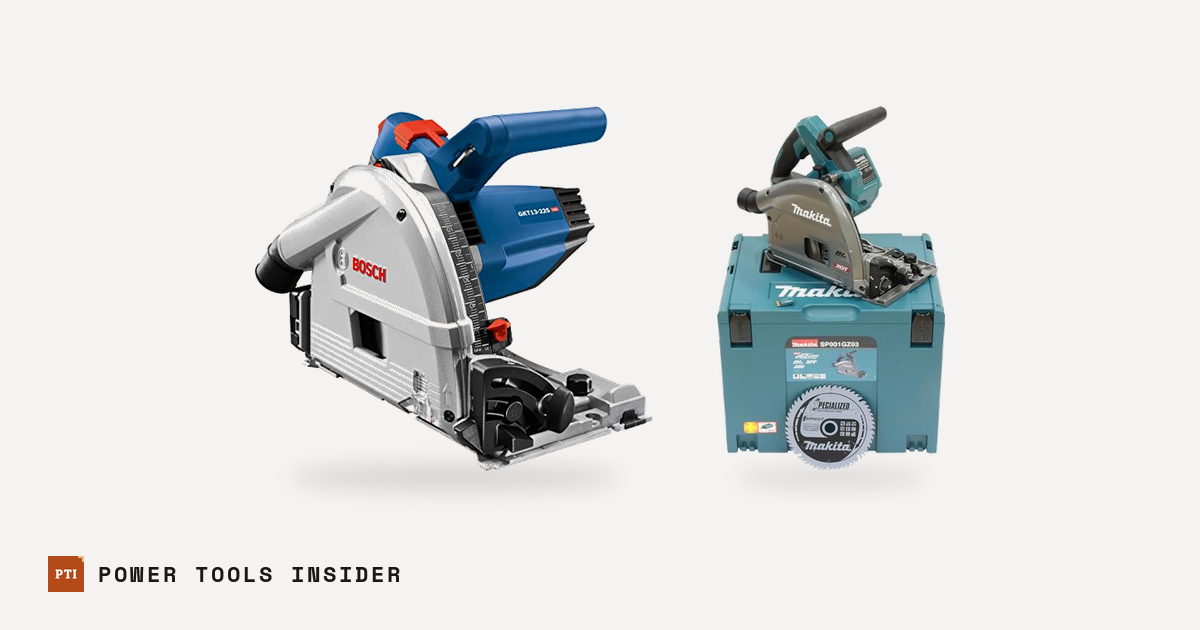
Track saws deliver table-saw-quality cuts without the bulk. Whether you’re breaking down sheet goods, making precision crosscuts, or need to work on-site, these precision cutting tools combine portability with accuracy that traditional circular saws can’t match. Here’s what you need to know to choose the right track saw in 2026.
| Award | Model | Price | Rating | Why We Picked It | Buy |
|---|---|---|---|---|---|
| Best Corded | Bosch GKT13-225L | ~$669 | 4.8/5 | Best overall precision, lighter than competition, excellent dust collection | Buy Now |
| Best Cordless | Makita GPS01M1J | ~$719 | 4.7/5 | 40V XGT power, Automatic Speed Change tech, read current reviews before buying (see quality note) | Buy Now |
Track Saw vs. Circular Saw vs. Table Saw: Which Do You Need?
Before diving into specific models, understand where track saws fit in your shop.
Track Saw = Portable Precision
Use when you need table-saw-quality cuts but can’t move your workpiece. Perfect for breaking down 4×8 sheet goods, cutting installed countertops, or working in tight spaces. The track guarantees straight, splinter-free cuts every time.
Table Saw = Workshop Workhorse
Better for repetitive cuts, dado work, and heavy production. Fixed setup means better for shop use but zero portability. Check out our table saw guide if this describes your needs.
Circular Saw = Jobsite Essential
More versatile for rough carpentry, framing, and general cutting. Lighter, cheaper, faster setup. But accuracy depends entirely on your hand steadiness or guide setup. See our circular saw recommendations for standard cutting needs.
Bottom line: If 80% of your work is breaking down plywood or making precision crosscuts on cabinets, a track saw pays for itself in time savings and reduced waste.
Cordless vs. Corded Track Saws
Corded advantages: Unlimited runtime, typically lighter (no battery weight), consistent power delivery, lower cost. Best for shop use with accessible outlets.
Cordless advantages: Work anywhere, no cord management, safer on ladders or scaffolding. Modern 40V-60V platforms deliver near-corded performance. Best for contractors moving between sites.
2026 reality: The gap has closed. Makita’s 40V XGT system now rivals corded performance for all but the most demanding hardwood cutting. Battery cost is the deciding factor, add $200-300 if you’re not already invested in the platform. One caveat: Early 2026 user reports (including coverage by ToolGuyd) flagged fit-and-finish inconsistencies on some Makita GPS01 units, “warped and wobbly” rail engagement on a subset of production runs. If reliability consistency is your top priority, verify current production run reviews before purchasing the GPS01M1J.
Individual Reviews
Bosch GKT13-225L, Best Corded Overall
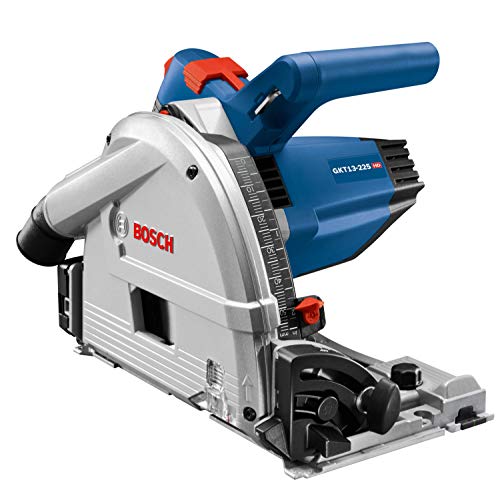
Price: ~$669 (with 55″ rail and case) | Rating: 4.8/5
The Bosch GKT13-225 dominates the corded category with a combination of precision, weight, and build quality that’s tough to beat. At 9.8 lbs, it’s the lightest professional track saw we’ve tested, yet the 13-amp motor delivers consistent power through oak and maple without bogging down.
The single pivot point for bevel cuts (-1° to 47°) is brilliantly simple, no fumbling with multiple adjustments. Constant electronics maintain speed under load, which matters when you’re 3 feet into an 8-foot rip through hardwood plywood. The swiveling dust port connects to any shop vac and captures 95%+ of sawdust with good hose seal.
Pros
- Lightest professional track saw (9.8 lbs)
- Exceptional cut quality with zero tearout
- Single-pivot bevel system (-1° to 47°)
- Excellent dust collection (95%+ capture)
- Includes case, blade, and rail
Cons
- Pricier than Makita corded option
- Rail connection less secure than competitors
| Spec | Value |
|---|---|
| Motor | 13 amp |
| Blade Size | 6-1/2″ |
| Cut Depth (90°) | 2-3/16″ |
| Cut Depth (45°) | 1-9/16″ |
| Bevel Range | -1° to 47° |
| Weight | 9.8 lbs |
| Speed | 6,250 RPM |
Bottom Line: The GKT13-225L is the track saw to beat for shop-based woodworkers who value precision and don’t need cordless portability. The weight savings alone make it worth the premium over heavier competitors.
Makita GPS01M1J, Best Cordless Overall

Price: ~$744 (verify current kit configuration on Amazon) | Rating: 4.7/5
Makita’s 40V XGT platform delivers the cordless track saw performance contractors have been waiting for. The GPS01 combines genuine corded-level power with Automatic Speed Change technology that adjusts RPM and torque mid-cut based on load, you feel it shift down when it hits a knot, then ramp back up on the other side.
The AWS (Auto-start Wireless System) integration is brilliant if you’re invested in Makita’s ecosystem. Pair it with an AWS vacuum, and dust extraction starts automatically when you pull the trigger. Variable speed (2,500-4,900 RPM) lets you dial in the perfect speed for different materials, slower for melamine to prevent chipping, faster for hardwoods.
Pros
- 40V XGT delivers true corded performance
- Automatic Speed Change adjusts to load
- AWS wireless dust extractor integration
- Variable speed 2,500-4,900 RPM
- Deep 2-3/16″ cutting capacity
Cons
- Heavier at 11 lbs with battery
- XGT batteries expensive if starting fresh
- Rail sold separately from bare tool
- Early 2026 reports (ToolGuyd) of fit-and-finish inconsistencies on some units, verify current reviews before purchasing
| Spec | Value |
|---|---|
| Battery | 40V max XGT |
| Blade Size | 6-1/2″ |
| Cut Depth (90°) | 2-3/16″ |
| Cut Depth (45°) | 1-9/16″ |
| Bevel Range | -1° to 48° |
| Weight | 11 lbs (with battery) |
| Speed | 2,500-4,900 RPM (variable) |
2026 Quality Update
Early 2026 production runs have drawn fit-and-finish complaints, specifically rail engagement and carriage wobble, on a subset of GPS01 units per ToolGuyd coverage and Amazon user reviews. Check current review dates before purchasing. If consistent build quality is non-negotiable, verify that recent reviews confirm the issue has been resolved before committing.
Bottom Line: If you’re already deep in the Makita 40V XGT ecosystem, the GPS01 delivers genuine corded performance with class-leading AWS dust integration. Just verify current reviews before buying, the quality concern is real but not universal.
Makita SP6000J1, Best Value Corded (Discontinued)

Status: Discontinued, No longer available new as of early 2026. | Rating: 4.6/5
This product has been discontinued and is no longer available on Amazon. See the Bosch GKT13-225L for our current corded track saw recommendation.
The SP6000J1 has been Makita’s workhorse track saw for years, and it remains the value king in 2026. At 9.7 lbs, it’s even lighter than the Bosch, and the 12-amp motor with electronic speed control delivers smooth, consistent cuts through hardwoods and sheet goods without complaint.
What makes this a value pick isn’t just the $180 savings over premium options, it’s that Makita includes the 55″ guide rail in the kit price. Most competitors charge $150-200 for rails separately. Variable speed (2,000-5,200 RPM) and a torque limiter protect the motor from burnout, while the soft start makes initial engagement smooth and controlled.
Pros
- Exceptional value with rail included
- Lightest in class at 9.7 lbs
- Proven reliability (on market since 2015)
- Variable speed 2,000-5,200 RPM
- Close-to-wall cutting (11/16″)
Cons
- No AWS dust integration
- Manual speed adjustment (no auto-adjust)
- Older design vs. newer Bosch features
| Spec | Value |
|---|---|
| Motor | 12 amp |
| Blade Size | 6-1/2″ |
| Cut Depth (90°) | 2-3/16″ |
| Cut Depth (45°) | 1-9/16″ |
| Bevel Range | -1° to 48° |
| Weight | 9.7 lbs |
| Speed | 2,000-5,200 RPM (variable) |
Bottom Line: The SP6000J1 was an excellent value pick for years, and used examples still hold up. It’s no longer available new, for a current corded purchase, the Bosch GKT13-225L is the recommended pick.
DeWalt DCS520B, Best for FLEXVOLT Users (Discontinued)
Status: Discontinued, No longer available new as of early 2026. | Rating: 4.5/5
This product has been discontinued. FLEXVOLT users should check DeWalt’s current lineup for a replacement cordless track saw.
DeWalt’s FLEXVOLT track saw makes perfect sense if you’re already invested in their 20V/60V battery ecosystem. The brushless motor paired with their specially designed transmission delivers 1,750-4,000 RPM with minimal blade deflection, even in deep hardwood cuts. At 12.5 lbs with battery, it’s heavier than the Makita cordless, but the tradeoff is rock-solid stability.
The straight plunge mechanism and parallel-link design mean you can use this saw in any orientation, flat, vertical, overhead, without the carriage shifting or binding. The continuous anti-kickback mechanism and riving knife provide genuine safety confidence that matters when you’re making long rip cuts in expensive hardwood.
Pros
- FLEXVOLT 60V power matches corded performance
- Straight plunge works in any orientation
- Continuous anti-kickback mechanism
- Deep 2-1/8″ cut capacity
- 90% dust collection efficiency
Cons
- Heavier at 12.5 lbs with battery
- Rail and battery sold separately (tool only)
- Pricier than corded alternatives
| Spec | Value |
|---|---|
| Battery | 60V MAX FLEXVOLT |
| Blade Size | 6-1/2″ |
| Cut Depth (90°) | 2-1/8″ |
| Cut Depth (45°) | 1-5/8″ |
| Bevel Range | 0° to 45° |
| Weight | 12.5 lbs (with battery) |
| Speed | 1,750-4,000 RPM |
Bottom Line: The DCS520B was a strong cordless option for DeWalt FLEXVOLT users but has been discontinued. Check DeWalt’s current cordless track saw offerings if you’re already invested in the FLEXVOLT ecosystem.
Full Specs Comparison
| Model | Power | Cut Depth (90°) | Weight | Speed | Price |
|---|---|---|---|---|---|
| Bosch GKT13-225L | 13A Corded | 2-3/16″ | 9.8 lbs | 6,250 RPM | ~$669 |
| Makita GPS01M1J | 40V XGT | 2-3/16″ | 11 lbs | 2,500-4,900 RPM | ~$719 |
| Makita SP6000J1 | 12A Corded | 2-3/16″ | 9.7 lbs | 2,000-5,200 RPM | Discontinued |
| DeWalt DCS520B | 60V FLEXVOLT | 2-1/8″ | 12.5 lbs | 1,750-4,000 RPM | Discontinued |
*All weights measured as bare tool without battery for cordless models. Prices are approximate as of March 2026.
How to Choose Your Track Saw
Corded vs. Cordless, Do You Really Need Batteries?
Ask yourself: Where am I cutting? If 90% of your work happens in a shop within 25 feet of an outlet, corded saves you $200+ and eliminates battery charging hassles. If you’re a contractor moving between sites, working on installed cabinetry, or frequently cutting on ladders, cordless freedom is worth the premium.
Reality check: Modern 40V-60V cordless track saws (Makita XGT, DeWalt FLEXVOLT) now match corded performance. The gap is weight and cost, not cutting power.
Track Length and Expandability
All 2026 track saws use 6-1/2″ blades with similar cut depths (2-1/8″ to 2-3/16″ at 90°). The real differentiation is track ecosystem:
- 55″ tracks handle most 4×8 sheet breakdowns (diagonal cuts on plywood, cabinet panel sizing)
- Track connectors let you join multiple sections for longer cuts, essential for countertop fabrication or large panel work
- Cross-compatibility varies by brand, Makita and DeWalt tracks are NOT interchangeable; budget for brand-specific expansions
Dust Collection Matters More Than You Think
Track saws generate enormous amounts of fine dust. Good collection isn’t about cleanliness, it’s about visibility and safety:
- 90%+ capture (Bosch, DeWalt) means you can see your cut line clearly through the entire cut
- Wireless integration (Makita AWS) eliminates the “start vacuum first” dance
- Universal ports (1-1/4″ standard) work with any shop vac, proprietary adapters are a red flag
Platform Investment, Don’t Overlook Battery Ecosystems
If you already own DeWalt FLEXVOLT or Makita XGT tools, the decision is easy, stay in your ecosystem. Batteries are expensive ($150-200 each), and you’ll want 2-3 for all-day work.
Starting fresh? Makita 40V XGT has broad tool selection, but given the early 2026 fit-and-finish reports on the GPS01, DeWalt FLEXVOLT is the lower-risk starting point for cordless track saw users right now. Check our drill comparison and battery platform guide for full ecosystem breakdowns.
Frequently Asked Questions
Can I use a track saw without the track?
Technically yes, but you shouldn’t. Track saws are designed around the track’s guidance system, the base plate, anti-splinter strip, and plunge mechanism all assume track use. Freehand cutting defeats the precision that justifies the tool’s cost. If you need a freehand saw, use a circular saw instead.
Are track saw tracks universal across brands?
No. Each manufacturer uses proprietary track designs. Makita tracks only work with Makita saws, DeWalt with DeWalt, etc. Festool has the most developed track ecosystem but at 2-3x the price. Budget for brand-specific track expansions when calculating total cost.
How thick of material can a 6-1/2 inch track saw cut?
Most 6-1/2″ track saws cut 2-1/8″ to 2-3/16″ deep at 90°, and 1-9/16″ to 1-5/8″ at 45°. This handles standard 3/4″ plywood, hardwood boards up to 2″ thick, and most countertop materials. If you regularly cut thicker stock, consider a larger blade model.
Do I need a track saw if I already have a table saw?
It depends on your work. Track saws excel at breaking down full 4×8 sheets safely (which is awkward on most table saws), cutting installed materials like countertops, and working in tight spaces. If you frequently wrestle plywood across a table saw or make cuts on-site, a track saw is worth adding to your arsenal. They complement rather than replace table saws.
What’s the difference between a track saw and a plunge saw?
They’re the same tool with different names. “Track saw” and “plunge saw” both describe a circular saw that mounts to a guide rail and uses a spring-loaded plunge mechanism to lower the blade into the workpiece. Some manufacturers prefer “plunge saw” (Makita, Festool), others use “track saw” (DeWalt, Bosch).
Can track saws cut metal or tile?
Track saws are designed for wood, wood composites, and plastics. While you can install metal-cutting or diamond blades, the high RPM and precision bearings aren’t optimized for those materials. Use a dedicated metal chop saw or tile saw instead, they’re designed for the stresses and debris those materials generate.
Power Tool Insider is reader-supported. When you buy through links on our site, we may earn an affiliate commission at no extra cost to you. This doesn’t affect our recommendations, we only recommend tools we’d actually use. Full disclosure.