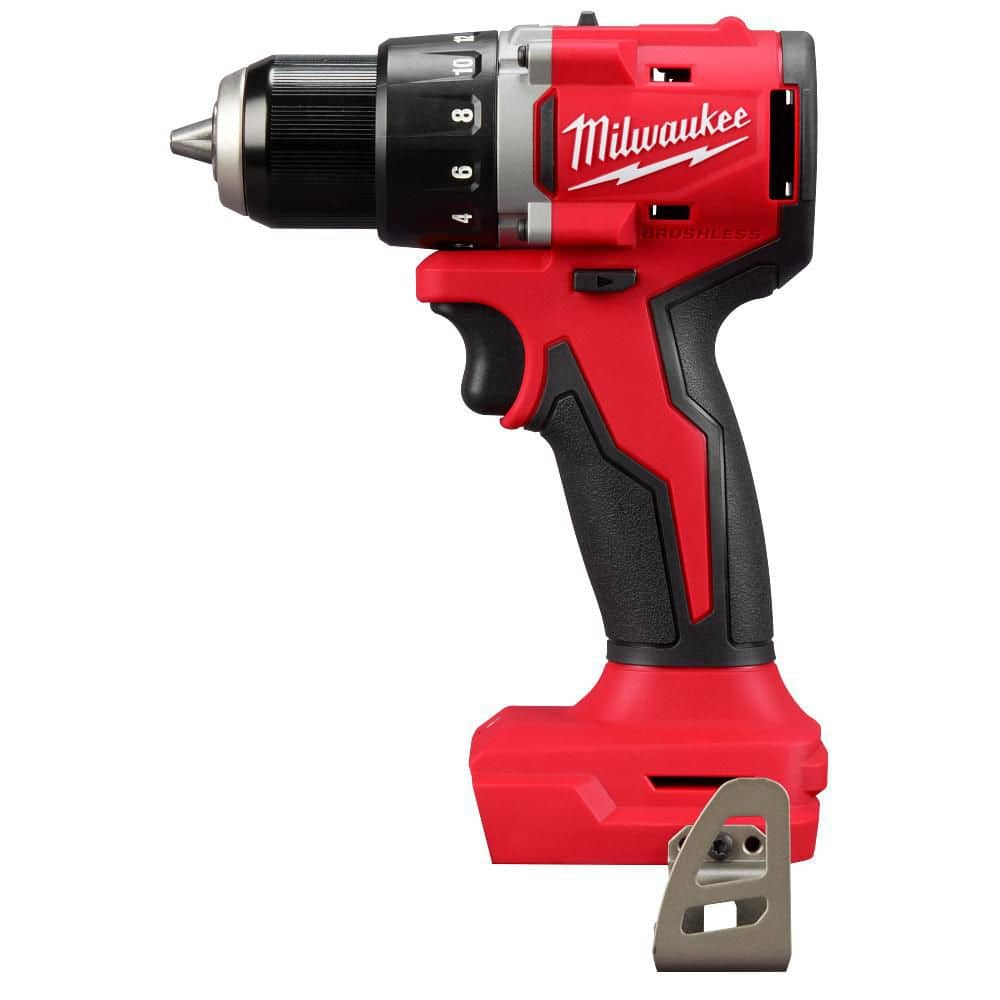
If you want one answer: buy an 18V or 20V drill/driver kit with a 1/2-inch chuck and two batteries, and stay on a battery platform you can grow into. Most homeowners land on Ryobi ONE+ or DeWalt 20V MAX. The only reason to go smaller is if you drill overhead all day and want a light 12V body, and the only reason to spend more is if you drill concrete or drive lags into framing.
Short version done. The rest of this page walks the five questions that actually change the answer, and every branch points you to the PTI article that ranks the tools for that job. Treat it as a decision guide rather than a ranked list.
Question 1: What voltage do you need?
Voltage is the first fork in the road, and it decides how much the tool weighs and what it can drive.
- 12V drills are light, compact, and easy to hold overhead or inside a cabinet. They will drive screws and bore holes up to about 1 inch in softwood. They will bog down on hardwood, hole saws, and anything in masonry.
- 18V and 20V drills cover nearly everything a homeowner or a tradesperson does on wood and light metal. The real buying decision lives in that category.
- Higher voltage platforms (36V, 54V, 60V) exist mainly for outdoor power equipment. You do not need one for a hand drill.
The naming is messy, and worth understanding before you shop. DeWalt calls its platform 20V MAX, but the cells inside are nominally 18V. Milwaukee M18 is 18V. Ryobi ONE+ is 18V. A “20V MAX” drill and an “18V” drill are in the same performance class, so compare torque and chuck, not the number on the sticker.
Question 2: Do you need a hammer function?
A hammer drill adds a rapid pulsing action behind the bit so it can punch through brick, block, and light concrete. A drill/driver alone will stall out in masonry and burn up the bit.
Here is the honest trade-off. A hammer drill weighs more, costs more, and its hammer mechanism does nothing useful in wood. If you never touch masonry, skip it and put the money into a better battery kit.
If you hang shelves in a brick townhouse, mount a TV into block, or anchor anything into a garage slab, get the hammer function. It is the single most common reason people come back for a second drill.
One caveat: a cordless hammer drill is not a rotary hammer. For repeated holes in poured concrete, a dedicated SDS rotary hammer is the right tool, and no 18V drill/driver will match it.
Question 3: Which battery platform should you commit to?
Over the next five years, this is the question that matters most, and the one most buyers get wrong. The drill is cheap compared to the batteries, and batteries only fit their own brand.
Pick the platform by the tools you will buy next, not by the drill in front of you. If you plan to add a circular saw, a reciprocating saw, a trimmer, and a blower, the platform with the widest and cheapest lineup wins.
- Ryobi ONE+ runs 300+ tools on one battery, including outdoor power equipment, and it is the cheapest way into a full platform. Breadth is why it is the default recommendation for a first-time buyer.
- DeWalt 20V MAX has a deep lineup of woodworking and jobsite tools and is sold everywhere, which makes batteries easy to replace.
- Milwaukee M18 costs the most up front and is aimed at trades. If you are already in M18 for work, stay in M18.
Do not buy a drill on a platform you do not intend to grow into, no matter how good the one-day price looks. A cheap drill on a dead platform costs you a full set of batteries later. Our battery platforms compared breakdown covers which brands share chargers and which do not.
Question 4: What is your budget ceiling?
Price bands map fairly cleanly to what you get, so set the ceiling before you shop and then ignore anything above it.
- Under 100 dollars: you are buying a kit with one or two compact batteries, a brushed or entry brushless motor, and a plastic or basic chuck. Fine for hanging pictures, assembling furniture, and light deck work.
- 100 to 200 dollars: the sweet spot sits here. You get a brushless motor, a metal ratcheting chuck, two batteries, and a charger. Most buyers should land here.
- Above 200 dollars: you are paying for more torque, a hammer function, bigger batteries, or a premium platform. Justified for daily trade use, not for occasional DIY.
Two picks that bracket the middle of that range, both verified live at the time of writing:
Ryobi P215K1 is an 18V ONE+ drill/driver kit with two 1.5Ah batteries, a charger, and a bag. It lists around 81 dollars at Home Depot. It is the cheapest sensible way onto a platform that will still fit a trimmer and a blower three years from now.
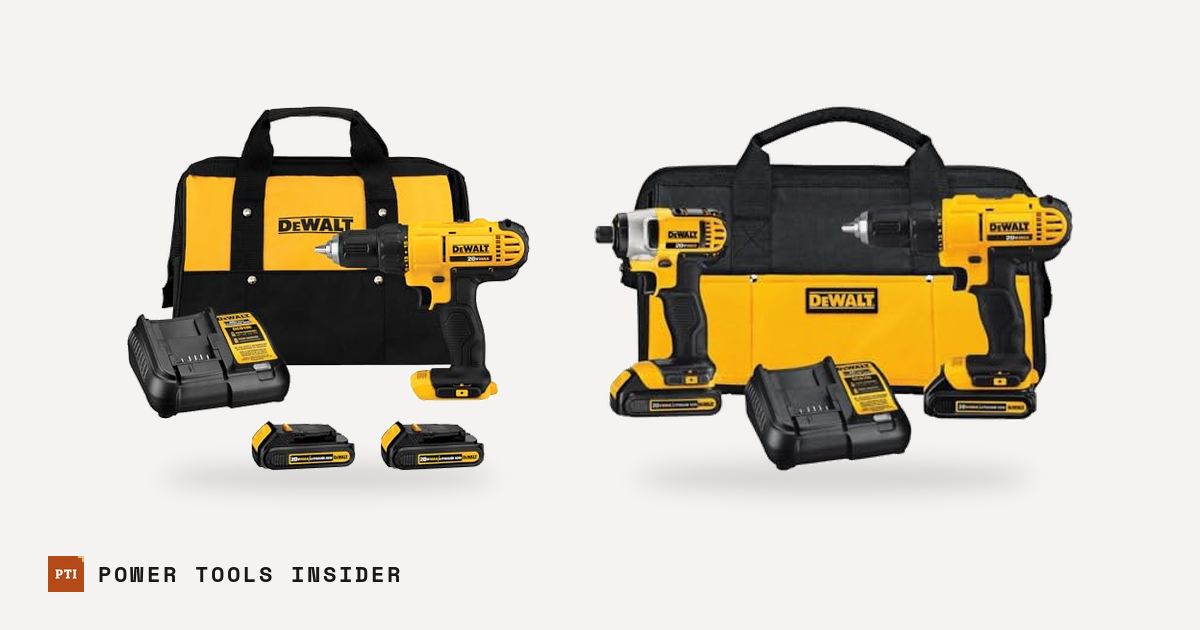
DeWalt DCD771C2 is a 20V MAX drill/driver kit with two batteries and a charger. It lists around 119 dollars on Amazon and carries a 4.8 rating across roughly 50,000 reviews. The motor is rated at 300 unit watts out, the transmission runs two speeds at 0-450 and 0-1,500 rpm, and the chuck is a 1/2-inch single-sleeve ratcheting type.
Question 5: Drill, impact driver, or a combo kit?
These two tools look similar and do different jobs. A drill spins a bit and holds it with a chuck. An impact driver hammers rotationally and uses a 1/4-inch hex collet, which makes it far better at driving long screws without stripping heads or torquing your wrist.
If you mostly drill holes and drive the occasional screw, buy a drill. If you assemble decks, build fences, or drive hundreds of screws, the impact driver is the tool you will reach for. Our impact driver vs drill comparison breaks down which one to buy first.
If you need both, a combo kit is cheaper than buying the two tools separately, and it comes with shared batteries. The catch is that combo kits often ship with compact batteries, so check the amp-hour rating before you assume you are getting a deal. The DeWalt DCK240C2 pairs a drill/driver with an impact driver, two batteries, a charger, and a bag for around 149 dollars, and it is the cheapest legitimate way to get both tools on one platform.
Your answer, by branch
Find the row that matches how you answered the five questions. Each one hands you off to the PTI page that ranks the picks for that job.
| If you answered | Buy this shape of tool | Start here |
|---|---|---|
| First drill, tight budget | 18V kit, two compact batteries, brushless if the price allows | Best cordless drills for beginners |
| Under 100 dollars total | Entry 18V kit, expect one battery and a basic chuck | Best cordless drills under 100 dollars |
| Wood, metal, and general jobsite | 20V or 18V brushless drill/driver, 1/2-inch metal chuck | Best cordless drills 2026 |
| Masonry, brick, or block | Hammer drill on your chosen platform | Best cordless drills 2026 |
| Hundreds of screws | Impact driver, or a combo kit with both tools | Best cordless combo kits |
| Overhead and inside cabinets | 12V compact drill/driver | Best cordless drills 2026 |
What to skip
A few buying patterns waste money, and they show up in every deal season.
- Off-brand drills on no-name platforms. The drill may work, but you will never find a second battery, and the charger is proprietary. Once the battery dies the tool is scrap.
- Drills that ship without a battery. A bare tool looks cheap until you price the battery and charger, which often cost as much as the tool.
- Huge piece-count kits that skimp on the drill. A 200-piece accessory set bundled with a weak drill is not a deal. The drill is the part you will use every week.
- Paying for a hammer function you will not use. It adds weight and cost, and it does nothing in wood.
One more note on batteries: a 1.5Ah pack is fine for drilling but will run a circular saw or a grinder for only a few minutes. If you plan to add heavier tools later, budget for a 4.0Ah or larger pack.
How we picked
We do not test every drill in a lab, and we do not claim to. The picks above are chosen on verified current listings, published specs, platform breadth, and long-run owner reports. Prices move, so treat every number here as the price at the time of writing and check the listing before you buy. To see how the major brands stack up, check our best power tool brands ranking.
FAQ
Which cordless drill is best for home use?
An 18V or 20V drill/driver kit with a 1/2-inch chuck and two batteries covers nearly every home task. Ryobi ONE+ is the cheapest way onto a broad platform, and DeWalt 20V MAX is the most widely available alternative. Both handle drilling in wood and metal plus everyday screw driving.
Is 18V better than 12V for a cordless drill?
18V has more torque and runtime, so it handles hole saws, hardwood, and masonry far better than 12V. 12V wins on weight and size, which matters for overhead work and tight cabinets. Most buyers should start at 18V and add a 12V compact later if they need one.
Do I need a hammer drill for concrete?
A hammer drill will get through brick, block, and light concrete for occasional holes such as anchors and shelf brackets. Repeated holes in poured concrete call for a dedicated SDS rotary hammer, and no cordless drill/driver will match it.
Should I buy a drill or an impact driver first?
Buy the drill first if you mostly bore holes. Buy the impact driver first if your work is dominated by driving long screws, such as decks and fencing, because it drives faster without stripping heads or twisting your wrist. If you need both, a combo kit is cheaper than two separate purchases.
What voltage drill do professionals use?
Most trades use 18V platforms such as Milwaukee M18, DeWalt 20V MAX, or Makita LXT. These deliver the torque and runtime needed for daily drilling and driving. Professionals pick the platform their crew or employer already uses so batteries and chargers are shared.
Can I use one battery for all my tools?
Yes, within a single brand platform. Batteries are not interchangeable across brands, so a DeWalt battery will not fit a Ryobi tool. That is why choosing the platform matters more than choosing the drill. Pick the brand whose tool lineup matches what you plan to buy next.
Power Tool Insider is reader-supported. When you buy through links on our site, we may earn an affiliate commission at no extra cost to you. This does not affect our recommendations. We only recommend tools we would actually use. Full disclosure.