
Bolt torque is where fastener knowledge turns into actual holding strength. Too loose and the joint rattles apart. Too tight and you stretch the threads, strip them, or shear the bolt. A torque table gives you the number before you turn the wrench. This chart covers the two common fastener standards you’ll actually find in the hardware aisle: SAE grades 2, 5 and 8, and metric classes 8.8, 10.9 and 12.9, with the drop in torque you need when threads are lubricated.
Two things are worth knowing before you use this chart. These are dry-thread values unless the column says otherwise, and torque changes with fastener size the same way it scales with grade. The table below has both, so you can look up any common bolt from a quarter-inch machine screw up to a 1-inch structural bolt.
Bolt Torque Chart by Grade (Dry Threads)
Torque values below are for clean, dry, unplated threads. Reduce torque when threads are lubricated, oily, or coated (see the lubricated section below). All values in foot-pounds (ft-lbs).
| Bolt Size | Grade 2 | Grade 5 | Grade 8 | Class 8.8 | Class 10.9 | Class 12.9 |
|---|---|---|---|---|---|---|
| 1/4″ (M6) | 6 | 9 | 13 | 7 | 11 | 13 |
| 5/16″ (M8) | 11 | 19 | 27 | 18 | 25 | 31 |
| 3/8″ (M10) | 20 | 33 | 46 | 36 | 51 | 61 |
| 7/16″ (M11) | 29 | 50 | 70 | 53 | 75 | 90 |
| 1/2″ (M12) | 40 | 72 | 101 | 79 | 111 | 133 |
| 9/16″ (M14) | 57 | 103 | 144 | 126 | 176 | 212 |
| 5/8″ (M16) | 79 | 142 | 199 | 192 | 269 | 323 |
| 3/4″ (M18) | 139 | 250 | 351 | 279 | 392 | 470 |
| 7/8″ (M20) | 199 | 360 | 504 | 405 | 568 | 681 |
| 1″ (M22) | 291 | 524 | 734 | 560 | 784 | 941 |
Dry vs Lubricated Threads: Cut Torque by About a Third
Here is the detail almost every fastener chart skips. The values above assume clean, dry threads. Add any lubricant, thread compound, or oil (including the factory anti-corrosion coating some bolts ship with) and friction drops, so the torque needed to reach the same clamp load drops too. Any of these will run about 25 to 35 percent lower than the dry figure.
That matters most on fasteners with manufacturer guidance, like wheel lug nuts, cylinder head bolts, or suspension hardware. If the service manual specifies a value, use the manufacturer’s number, not this chart. For general hardware where you have no spec, pull the dry value down by a third for lubricated threads.
How Bolt Grade Markings Work
The head of every structural bolt carries raised markings that tell you its grade. Learn to read them and you never guess at strength again.
SAE Grade Head Markings
| Grade | Head Marking | Min Tensile Strength | Common Use |
|---|---|---|---|
| Grade 2 | No marking | 74,000 psi | General hardware, low-stress |
| Grade 5 | Three radial lashes 120° apart | 120,000 psi | Automotive, medium-stress joints |
| Grade 8 | Six radial lashes | 150,000 psi | High-stress, suspension and driveline |
Metric Class Head Markings
| Class | Head Marking | Min Tensile Strength | Common Use |
|---|---|---|---|
| 8.8 | 8.8 | 116,000 psi | General engineering, standard hardware |
| 10.9 | 10.9 | 150,000 psi | Automotive, heavy equipment |
| 12.9 | 12.9 | 174,000 psi | Racing and high-tensile applications |
How to Torque a Bolt the Right Way
Clean the threads, pick the correct spec from the table, and run the bolt smooth and steady. Never pull the handle fast and jerk it to the mark. Let the wrench click or beep and stop there. For joints with multiple bolts, work in a star or cross pattern and take each bolt in two or three passes up to final torque, so one bolt doesn’t take all the load.
If you do not own a torque wrench, this chart is only useful on paper. A click or digital wrench removes the guesswork, and any of the picks below will cover the household and automotive range above.
Got the Spec? Here’s What to Torque It With
| Product | Price | Best For | Buy |
|---|---|---|---|
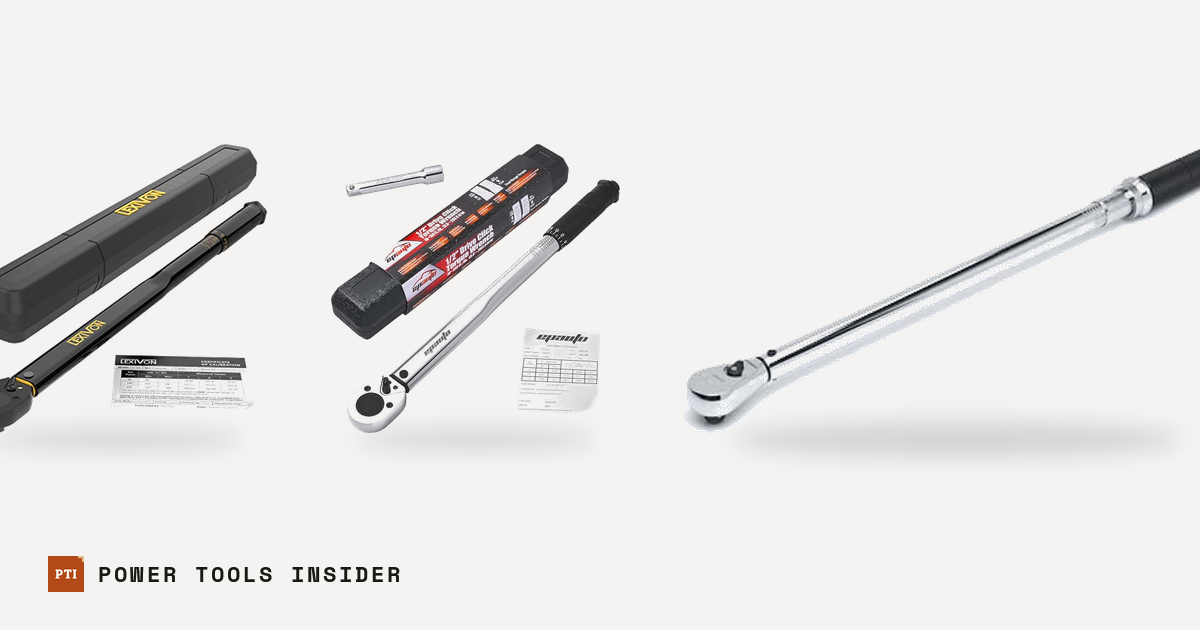
| EPAuto 1/2″ Click Torque Wrench | $31.32 | 10-150 ft-lb, covers 1/4″ through 5/8″ bolts in the table | Buy Now |
| LEXIVON 1/2″ Drive Click Torque Wrench | $69.97 | 25-250 ft-lb, stretches into 3/4″ and 7/8″ fastener territory | Buy Now |
| GEARWRENCH 8506D Micrometer Torque Wrench | ~$120 | 30-250 ft-lb, shop-grade repeatability for pros | Buy Now |
Frequently Asked Questions
What does the 8.8 or 10.9 on a bolt head mean?
The first number is the tensile strength in hundreds of megapascals, the second is the yield ratio. An 8.8 bolt has 800 MPa ultimate tensile and 80 percent yield ratio. Multiply across and a class 10.9 is 1000 MPa tensile, roughly twice the strength of a standard hardware bolt.
Do I need a different torque for lubricated bolts?
Yes. Lubricant cuts friction, so the same clamp load needs about 25 to 35 percent less torque. Use manufacturer specs when one is given, otherwise reduce the dry number by a third.
Is bolt torque the same as lug nut torque?
Not exactly. Lug nuts follow a vehicle-specific spec based on the wheel stud and hub, not the grade table above. Our lug nut torque chart by vehicle covers those numbers. This bolt torque chart covers general SAE and metric fasteners.
How much is 100 ft-lbs in Nm?
100 foot-pounds is about 135.6 Newton-meters. Multiply ft-lbs by 1.3558 to convert to Nm, or divide by 0.7376 to go the other way.
Can I over-torque a bolt with a torque wrench?
Only if the wrench is out of calibration or you keep pulling past the click. A calibrated click wrench stops at the set value. Cheaper wrenches drift with hard use, so shop-grade units hold accuracy longer.
Why is my torque wrench reading low on greased threads?
Friction drops with lubrication, so the same wrench setting reaches a higher clamp load than on dry threads. If you wet-torque a fastener to a dry spec, you overshoot the intended tension. That is why the wet value is lower.
Related Articles
Power Tool Insider is reader-supported. When you buy through links on our site, we may earn an affiliate commission at no extra cost to you. This doesn’t affect our recommendations, we only recommend tools we’d actually use. Full disclosure.