Quick Picks
| Category | Winner | Why It Wins | Price | Buy |
|---|---|---|---|---|
| Best Overall | Dremel 8250 | Brushless motor, 3Ah battery, premium performance | ~$208 | Buy Now |
| Best Value | Milwaukee M12 2460-20 | 32,000 RPM, $99 price, M12 battery compatibility | $99 | Buy Now at Home Depot |
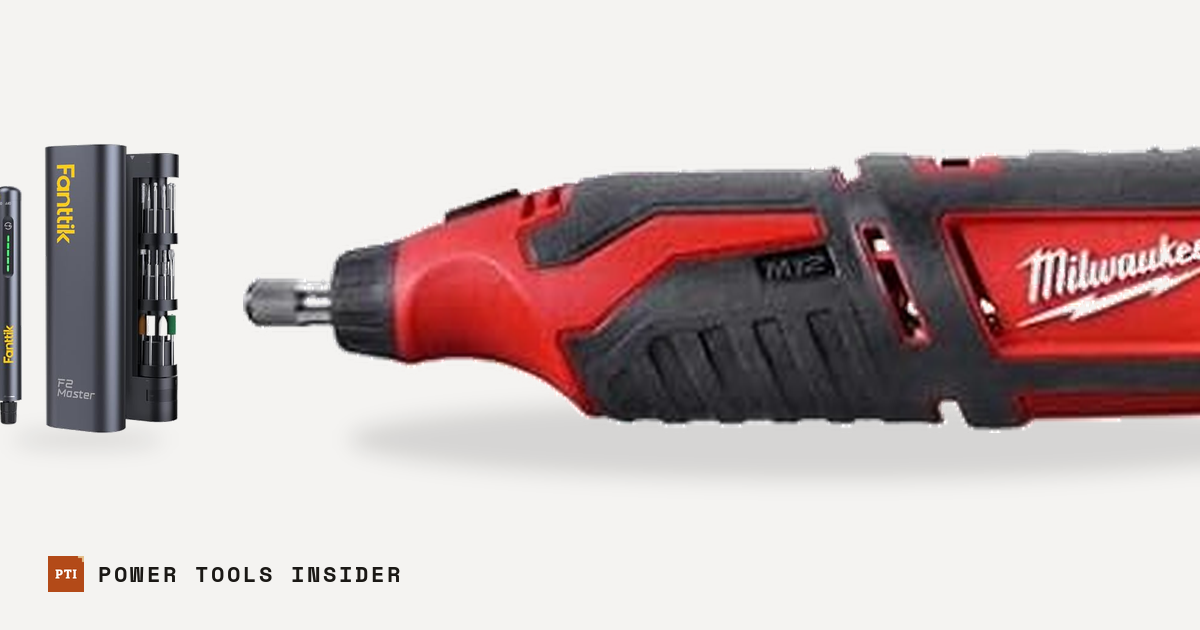
| Best Compact | Fanttik F2 Master | Ultra-light (0.22 lbs), 5-speed, 35-piece kit with rotating storage | $69.99 | Buy Now on Amazon |
| Best Die Grinder | Milwaukee M12 FUEL 2485-20 | Right-angle design, fits tight spaces, 4-mode speed | $159 | Buy Now at Home Depot |
| Best for DeWalt Users | DeWalt 20V MAX DCG426B | Familiar platform, brushless, variable speed | $149 | Buy Now on Amazon |
Rotary Tool vs Die Grinder: What’s the Difference?
Let me save you some confusion. These terms get thrown around interchangeably by people who don’t know better.
Rotary tools (like Dremel) are the precision instruments. Smaller collets (usually 1/8″), higher RPMs (25,000-35,000), designed for detail work, engraving, polishing jewelry, cutting drywall, sanding tight curves. They’re the scalpel.
Die grinders are the hammer. Bigger collets (1/4″), lower RPMs (20,000-30,000), built for grinding metal, cleaning welds, porting cylinder heads. They’re pneumatic tools that finally went cordless.
The Milwaukee 2460-20 and Dremel 8250 are rotary tools, fine work, high RPM, small bits. The Milwaukee 2485-20, DeWalt DCG426B, and Makita GD001G are die grinders, metal removal, bigger bits, more torque.
Can you use a die grinder for detail work? Sort of. Can you use a rotary tool for grinding welds? You’ll be there all day and burn up the tool.
Buy the right one for the job. Or buy both like a responsible adult.
What to Look For: A Buyer’s Guide
RPM Range
More isn’t always better. Rotary tools top out at 30,000+ RPM for polishing and engraving. Die grinders run 20,000-29,000 RPM with more torque for actual material removal.
Variable speed matters. Fixed-speed tools force you to work at whatever RPM the manufacturer chose. Sometimes you want to slow things down for control.
Collet Size
1/8″ collets = rotary tool territory. Tons of accessory options for detail work. Limited for heavy grinding.
1/4″ collets = die grinder standard. Takes bigger bits, handles side loads better, built for metalwork.
Some tools include multiple collets. Others lock you into one size.
Right Angle vs Straight
Straight tools are what you picture, pencil grip, inline with the bit. Good for general work, harder to fit into tight spots.
Right-angle tools (Milwaukee 2485-20) put the business end perpendicular to the grip. Game-changer for engine bays, inside cabinets, anywhere your hand doesn’t fit.
Brushless vs Brushed
Brushless motors last longer, run cooler, give better battery life. They’re also more expensive.
The Milwaukee 2460-20 uses a brushed motor. It works fine, but it won’t last as long under heavy use. For occasional DIY duty? Doesn’t matter. For daily grinding? Get brushless.
Battery Platform
This is where brand loyalty pays off. Already got M12 batteries? The Milwaukee options are no-brainers. Deep into DeWalt 20V? The DCG426B slots right in.
Don’t buy a new battery platform for one tool unless it’s a spectacular deal.
The Reviews: What I Actually Think
Dremel 8250, Best Overall
The short version: The best cordless rotary tool Dremel has ever made. Full stop.
The real talk: The 8250 is what happens when Dremel stops playing around. Brushless motor. 3.0Ah battery that actually lasts. Variable speed from 5,000-30,000 RPM with real torque throughout the range.
At 1.3 pounds, it’s light enough for extended work. The 1/8″ collet handles all standard rotary accessories, cutting wheels, sanding drums, engraving bits, polishing pads. And it comes with a 5-piece accessory kit to get you started.
The battery life is the game-changer here. The included 3.0Ah pack runs for actual hours, not minutes. Previous cordless Dremels felt like you were constantly swapping batteries. The 8250 lets you finish projects without interruption.
The EZ Lock system for changing accessories actually works, no more wrenches and frustration. The LED light illuminates your work without being obnoxious.
Downsides? It’s not cheap at around $208 at time of writing. And if you’re already invested in another battery platform, the proprietary Dremel battery is a hard sell.
But if you want the best cordless rotary tool on the market, for engraving, polishing, cutting, sanding, this is it.
Verdict: Buy it if you want the best. The brushless motor and big battery justify the price.
Milwaukee M12 2460-20, Best Value
The short version: $99. 32,000 RPM. Works with your M12 batteries. What’s not to like?
The real talk: This is Milwaukee’s “we need an affordable rotary tool” option. It’s not brushless. It doesn’t have smart features. It just spins really fast and doesn’t cost much.
At 32,000 RPM, it out-spins the Dremel 8250 on paper. The variable speed dial (5,000-32,000) gives you control when you need it, speed when you don’t. The 1/8″ collet handles all the standard rotary tool accessories.
The brushed motor is the compromise. It’ll wear out faster than brushless options, and the tool gets warm during extended use. But for occasional DIY duty? It’ll outlive you.
The real win here is platform compatibility. If you’ve already got M12 batteries from a drill or impact driver, this slots right in. No new chargers, no proprietary batteries.
I keep one in a kitchen drawer for random household fixes. Cut drywall, sand furniture corners, polish aluminum trim, it handles the odd jobs without complaining.
Verdict: The best entry point into cordless rotary tools. Cheap enough to impulse buy, capable enough to keep.
Fanttik F2 Master, Best Compact Rotary Tool
Price: $69.99 | Buy Now on Amazon
The short version: At 0.22 pounds, this thing weighs less than your phone. Perfect for detail work where full-size rotary tools feel like sledgehammers.
The real talk: The Fanttik F2 Master isn’t trying to replace your Dremel 8250. It’s solving a different problem, ultra-portable precision work where weight and noise matter more than raw power.
The brushless hollow-cup motor (Fanttik calls it “NeoPulse”) hits 25,000 RPM across 5 speed settings. That’s lower than the Milwaukee 2460-20’s 32,000 RPM, but the trade-off is noise, this thing runs 30% quieter and won’t wake the house when you’re polishing jewelry at midnight.
At 0.22 pounds, it’s the lightest cordless rotary tool on the market. The Dremel 8250 weighs 1.3 lbs, nearly 6x heavier. For extended detail work like 3D print finishing, engraving, or polishing small parts, that weight difference transforms your wrist fatigue.
The RevoStor 360 rotating magnetic storage hub is clever, 35 accessories organized in a rotating magazine you can actually find things in. Better than digging through plastic cases.
The 3/32″ (2.3mm) accessory shank is the catch. It’s smaller than the standard 1/8″ Dremel size, which means you’re locked into Fanttik’s accessories or hunting for compatible bits. The included 35-piece kit covers most precision work, but you can’t just raid your existing Dremel accessory drawer.
This is a specialist tool. If you’re cutting drywall or grinding welds, buy the Milwaukee or Dremel. If you’re finishing miniatures, engraving glass, cleaning 3D prints, or polishing watch parts, this thing is perfect.
Verdict: Best compact rotary tool for detail work. The weight and noise reduction justify the smaller accessory ecosystem.
Disclosure: Fanttik is currently offering enhanced affiliate commissions (10-11% vs standard 3-4%) through May 15, 2026. This higher commission rate doesn’t change our review or recommendation, we only feature products we’d actually use. If you’re considering this tool, buy it because it fits your needs, not because we earn more. See our full affiliate disclosure.
Milwaukee M12 FUEL 2485-20, Best Die Grinder
The short version: If you need a right-angle die grinder that fits in your pocket, this is it.
The real talk: Milwaukee nailed the form factor. At just 4.4 inches long and 1.2 pounds, this thing disappears into tight spaces that make straight grinders useless. Engine bays, HVAC runs, inside cabinets, it goes where others can’t.
The 4-mode RPM control is actually useful. Mode 1 for detail work, Mode 4 when you need to hog material. The brushless motor delivers power that rivals pneumatics, and you don’t have to drag an air hose around.
The downside? 12V has limits. Heavy grinding sessions will drain batteries fast. The 1/4″ collet only means you’re locked into bigger bits, no Dremel-style engraving here.
But for what it is, a compact, powerful right-angle grinder, nothing touches it. I’ve used this for cleaning welds on a truck frame, porting an intake manifold, and grinding down hardware that didn’t fit. Never missed the cord.
Verdict: Buy it if you’re already on M12 and need a die grinder for tight spaces.
DeWalt 20V MAX DCG426B, Best for DeWalt Users
The short version: Solid performer for the DeWalt faithful. Heavy, but capable.
The real talk: If you’re already swimming in yellow batteries, the DCG426B is the logical choice. It brings 25,000 RPM and variable speed control to the familiar 20V MAX platform.
The variable speed rocker switch is well-designed, easy to feather speed with your thumb while maintaining grip. The brushless motor should last years of regular use.
It’s a straight grinder, which limits access in tight spots compared to the Milwaukee right-angle. But at 1/4″ collet, it’s built for metal grinding, not delicate engraving.
The DeWalt build quality shows here, this tool feels like it could survive a drop from a ladder. The 3-year warranty doesn’t hurt either.
If you’re not already on the DeWalt platform, the Milwaukee options make more sense. But for yellow battery loyalists? This is your die grinder.
Verdict: Platform loyalty makes this a no-brainer for DeWalt owners.
Makita XGT GD001G, Best Heavy-Duty
The short version: Corded power without the cord. Bring spare batteries.
The real talk: Makita’s 40V XGT platform is overkill for most people. That’s kind of the point. This die grinder hits 29,000 RPM with torque that makes 18V tools feel like toys.
The AFT (Active Feedback-sensing Technology) shuts the tool down if the bit binds. Anyone who’s had a die grinder try to break their wrist when a flap disc catches an edge will appreciate this. The triple LED lights actually illuminate your work. For more recommendations, check out our router bits guide for beginners guide.
Multiple collet sizes come included. The variable speed dial gives you real control from 7,000-29,000 RPM. You might also find our best oscillating multi-tools roundup and oscillating multi-tool blades guide helpful when you add a multi-tool to your shop.
Here’s the catch: 40V XGT batteries are expensive. Like, “should I just buy a corded grinder?” expensive. And at 3.5 pounds without battery, this isn’t the tool for delicate work.
But if you’re grinding welds daily, cleaning cast iron, or doing industrial fabrication? The power is undeniable.
Verdict: Pros only. Weekend warriors should look at 12V or 18V options.
US availability note: The GD001G is currently sold primarily in international markets (Japan, Singapore, Europe) and is not available via major US retailers. US buyers wanting 40V-class power for heavy-duty grinding should check the DeWalt DCG426B, currently 44% off at $144.99, or the Milwaukee M12 FUEL 2485-20 for tight-space work.
Specs Comparison
| Spec | Dremel 8250 | Milwaukee 2460-20 | Milwaukee 2485-20 | Fanttik F2 Master | DeWalt DCG426B |
|---|---|---|---|---|---|
| Voltage | 12V | 12V | 12V | 4V | 20V |
| Max RPM | 30,000 | 32,000 | 24,500 | 25,000 | 25,000 |
| Collet Size | 1/8″ | 1/8″ | 1/4″ | 3/32″ (2.3mm) | 1/4″ |
| Weight | 1.3 lbs | 1.3 lbs | 1.2 lbs | 0.22 lbs | 2.5 lbs |
| Brushless | Yes | No | Yes | Yes | Yes |
| Price | $169 (kit) | $99 | $159 | $69.99 | $149 |
| Buy | Buy Now on Amazon | Buy Now at Home Depot | Buy Now at Home Depot | Buy Now on Amazon | Buy Now on Amazon |
FAQ
Q: Dremel 8250 vs 8260, what’s the difference?
A: The 8250 is the newer model with a brushless motor and better battery life. The 8260 adds Bluetooth app control and a digital display. For most people, the 8250 is the better value.
Q: Can I use Dremel accessories in a Milwaukee rotary tool?
A: Yes, the Milwaukee 2460-20 uses 1/8″ collets, so standard Dremel bits fit perfectly.
Q: Are cordless die grinders as powerful as pneumatic?
A: Getting close. Modern cordless die grinders like the DeWalt DCG426B and Milwaukee M12 FUEL 2485-20 rival mid-tier air grinders for most shop applications. For sustained heavy grinding, pneumatics still win on runtime. For portability? Cordless wins.
Q: Do I need variable speed?
A: Yes. Fixed-speed tools force you to work at one RPM. Variable speed lets you slow down for control, speed up for removal.
Last updated: May 2026. Prices subject to change.
More from Fanttik
Looking for other precision tools? Check out our other Fanttik product guides:
- Best Laser Levels 2026, From picture hanging to full renovations
- Best Precision Electric Screwdrivers 2026, Phone & laptop repair made easy
- Best Portable Tire Inflators 2026, Never get stuck with a flat again
Power Tool Insider is reader-supported. When you buy through links on our site, we may earn an affiliate commission at no extra cost to you. This doesn’t affect our recommendations, we only recommend tools we’d actually use. Full disclosure.