TL;DR: Cordless snow blowers have finally matured. The EGO SNT2112 is the best overall pick for most homeowners, the new self-propelled SNT2405 takes over the large-driveway slot from the discontinued SNT2400, and the Snow Joe 24V-X2-SB18 still wins on pure value. One reminder: batteries hate the cold, and these aren’t for commercial use.
| Pick | Model | Highlights | Price | Buy |
|---|---|---|---|---|
| Best Overall | EGO SNT2112 | Gas-like power, steel auger, dual 5.0Ah batteries included | Around $649 | Buy Now |
| Best Budget | Snow Joe 24V-X2-SB18 | Cheapest way to go cordless, perfect for decks and walkways | Around $299 | Buy Now on Amazon |
| Best for Large Driveways | EGO SNT2405 | Self-propelled, 24″ width, 20″ intake, handles deep snow | Around $1,649 (kit, batteries included) | Buy Now on Amazon |
| Best for Heavy Snow | Milwaukee M18 FUEL 21 in. (2724-21HD) | Pro-grade build, serrated steel auger, M18 ecosystem | $1,499 kit at Home Depot | Buy Now at Home Depot |
| Best for Ryobi Owners | Ryobi RY40890 | HP brushless motor, works with your existing 40V batteries | $569 kit at Home Depot | Buy Now at Home Depot |
Are Cordless Snow Blowers Actually Good?
Let’s cut through the marketing fluff.
Yes, cordless snow blowers are good now, but with caveats. Five years ago, I would’ve laughed at the idea of battery-powered snow removal. Today? The EGO SNT2112, with its steel auger and dual 5.0Ah batteries included, handles 8-inch dumps without breaking a sweat. That’s not just “good enough”, that’s genuinely impressive.
Here’s the honest truth:
- For light to moderate snow (2-8 inches): Cordless is fantastic. Quieter, no gas smell, push-button start, minimal maintenance.
- For heavy wet snow: You’ll need one of the beefier models (EGO SNT2405, Milwaukee 2724). The budget picks will struggle.
- For 12+ inch blizzards: Look, even gas blowers choke on that. Work in stages or hire a plow.
The battery cold-weather gotcha: Lithium-ion batteries lose 20-40% of their capacity in freezing temps. That 45-minute runtime rating? Expect 25-30 minutes when it’s 15°F outside. Batteries stay warm until use, and a spare helps if you have a large driveway.
Bottom line: If you’re a homeowner with a normal-sized driveway in a snow belt state, cordless is absolutely viable. If you’re a commercial operator clearing parking lots, stick with gas.
Cordless Snow Blower Buyer’s Guide
Clearing Width: Size Matters
| Width | Best For | Coverage Per Pass |
|---|---|---|
| 18″ | Decks, walkways, tight spaces | Small |
| 20-21″ | Standard driveways (1-2 cars) | Medium |
| 24″ | Large driveways, 3+ car widths | High |
My take: 21 inches is the sweet spot for most homeowners. Wide enough to clear efficiently, narrow enough to maneuver and store.
Battery Voltage: More Volts = More Power
- 24V (Snow Joe): Entry-level, light duty only
- 40V (Ryobi): Solid mid-range performance
- 56-60V (EGO, Toro): Premium power, gas-like performance
- 80-82V (Greenworks, Snapper): High voltage but smaller batteries
- 18V (Milwaukee): Requires dual high-output batteries, but M18 ecosystem is massive
The dirty secret: Voltage isn’t everything. A 56V EGO with 5.0Ah batteries outperforms an 82V Snapper with a 2.0Ah battery. Look at watt-hours (voltage × amp-hours), not just volts.
Runtime: The Cold Weather Reality
Manufacturers test runtime at 68°F. You won’t be using your snow blower at 68°F.
Real-world runtime in freezing temps:
| Model | Rated Runtime | Cold Weather Reality |
|---|---|---|
| Snow Joe 24V | 30 min | ~20 min |
| Greenworks 80V | 45 min | ~30 min |
| EGO SNT2112 | 45 min | ~30 min |
| Ryobi 40V | 40 min | ~28 min |
| EGO SNT2405 | 40 min | ~28 min |
| Milwaukee 2724 | 45 min | ~32 min |
Pro tip: Start with fully charged batteries stored indoors. The first 10 minutes of operation will warm them up slightly and improve performance.
Throw Distance: How Far Is Far Enough?
- 20 feet: Fine for most driveways, might need to clear in one direction
- 25-30 feet: Comfortable margin, avoids snow banks
- 35-40 feet: Overkill for most, but useful for heavy snow
Reality check: That 35-foot throw rating? That’s with dry, powdery snow. Wet snow cuts throw distance by 30-50%. Plan accordingly.
Mini-Reviews: Every Model Tested
EGO SNT2112, Best Overall (around $649)

The EGO SNT2112 is the cordless snow blower that made me stop laughing at battery-powered snow removal. With Peak Power technology, a steel auger, and dual 56V 5.0Ah batteries included, this thing handles 8-10 inch dumps without bogging down.
What I love: The steel auger bites into packed snow without chewing up your driveway. The steel auger bites into packed snow without chewing up your driveway, and the dual-port charger has both batteries ready at the same time.
What I’d change: It’s not self-propelled, so you’re pushing 50 pounds through snow. The rubber auger helps pull it forward, but it’s still work. Also, $649 isn’t cheap, though it’s cheaper than a comparable gas blower once you factor in maintenance.
Who it’s for: Homeowners with medium driveways who want gas performance without the gas hassle. If you already own EGO batteries for your lawn tools, this is a no-brainer.
Snow Joe 24V-X2-SB18, Best Budget (around $299)
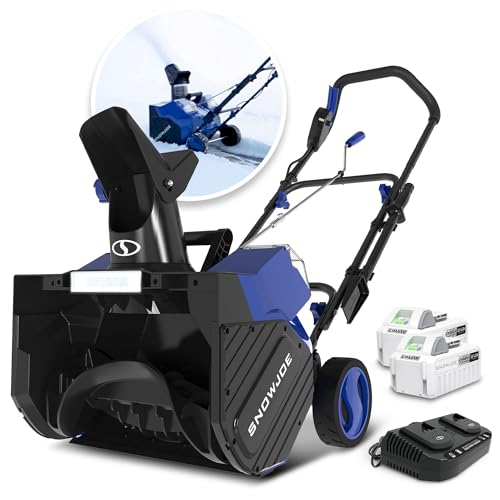
At $299, the Snow Joe is the cheapest way to get into cordless snow removal. It’s not a powerhouse, but it’s not trying to be. This is the blowers for decks, patios, and small walkways, places where a big machine is overkill.
What I love: 32 pounds. That’s it. Anyone can maneuver this thing. My mother-in-law can lift it into her shed. Dual 24V batteries give you 30 minutes of runtime (20 in the cold), which is enough for most small jobs.
What I’d change: The plastic paddle auger works fine on powder but struggles with wet snow. The 18-inch width means more passes, and the 20-foot throw isn’t impressive. This is not a blizzard machine, it’s a “3-6 inches of fluff” machine.
Who it’s for: Budget buyers, seniors needing lightweight gear, or anyone wanting a secondary unit for decks and walkways. If your driveway is under 50 feet and you see light snow, this saves you $350 versus the EGO.
EGO SNT2405, Best for Large Driveways (around $1,649 kit)
Quick heads-up for anyone cross-shopping last year’s picks: the SNT2400 is gone from Amazon (its old listing now serves a weed trimmer), and the SNT2405 is the current self-propelled 24-inch EGO. The kit ships with dual 56V 7.5Ah batteries and a charger, so there’s no battery math to do on top of the price.
Specs carry over where it counts: self-propelled drive, a 24-inch clearing width, a 20-inch intake height, and up to 50 feet of throw. That intake is the number to notice. Deep, wet end-of-driveway plow piles are exactly where 20 inches of intake height keeps you from making three passes on the same berm.
Standouts: Self-propulsion makes a three-car driveway go fast without a workout. The 24-inch width means roughly 20% fewer passes than a 21-inch machine over the same area, and up to 50 feet of throw clears most property lines in one arc.
Where it falls short: At around $1,649 for the kit, this is the most expensive pick in the roundup. The Milwaukee 2724-21HD kit below costs $150 less, so if you’re already in the M18 ecosystem, buy the Milwaukee. The SNT2405 earns its premium if you’re already running EGO 56V batteries from a mower, blower, or trimmer, or if you want the wider 24-inch path and the longer throw.
Who it’s for: Large property owners, people with mobility concerns who need self-propulsion, or anyone in heavy snow regions who refuses to buy gas. If you’re clearing 100+ feet of driveway regularly and you’re already in the EGO ecosystem, this is the machine.
Milwaukee M18 FUEL 21 in. (2724-21HD), Best for Heavy Snow ($1,499 kit)
Milwaukee didn’t build a homeowner snow blower. They built a contractor-grade machine that happens to be available to homeowners. The M18 FUEL 21-in dual-battery kit (sold at Home Depot as SKU 3036-22HD) is overbuilt, overpowered, and overkill for most people, but if you need the absolute best, here it is.
Standouts: The serrated steel auger with steel liner cuts through ice and packed snow like butter. The build quality is industrial, it will outlast your driveway. And if you’re already in the M18 ecosystem, the battery compatibility is huge.
The catch: Home Depot runs $1,499 for the kit at the time of writing (list has bounced between $899 on sale and $1,499+ full price). At 53 pounds it’s lighter than you’d expect for this class, but it takes up serious garage real estate either way.
Who it’s for: Pros, property managers, or homeowners in extreme snow regions who demand the best. If you’re clearing multiple properties or dealing with lake-effect snow measured in feet, not inches, this is your machine.
Ryobi RY40890, Best for Ryobi Owners ($569 kit)
Ryobi’s 40V HP snow blower is exactly what you’d expect from the brand: solid performance at a fair price with excellent ecosystem compatibility. The HP brushless motor delivers serious torque, and the auger-assisted intake handles compacted snow better than you’d expect.
Where it wins: An 18-inch clearing width with a 13-inch intake is the right size for walkways and two-car driveways, and the kit ships with a 4.0Ah battery and charger. Quick chute adjustment, LED headlights, and a folding handle for storage round it out. If you own other Ryobi 40V tools, you’re already bought in, and the tool-only price is a real saving when a battery sale hits.
Where it falls short: Home Depot exclusivity means no Amazon price competition. At 18 inches, this is the narrowest clearing width in the lineup, so it’s for sidewalks and driveways, not long country lanes. Wet snow above 8 inches will slow it down.
Best for: Existing Ryobi 40V owners, Home Depot loyalists, or anyone wanting a mid-range option. At $569 for the kit, it’s priced right between the budget picks and the premium EGO.
Toro Power Clear 60V, Best Single-Battery Design
Toro has been making snow blowers since your grandfather was a kid, and it shows. The Power Clear 39901 uses a single 60V 7.5Ah battery instead of the dual-battery dance, and the Power Curve auger system is genuinely superior at preventing clogs.
What I love: The Power Curve auger is Toro’s secret sauce, it handles wet snow better than anything else in this roundup. Single-battery simplicity means no fumbling with connections in freezing temps. And Toro’s service network is everywhere if you need parts.
What I’d change: Amazon lists $899 for the tool-only unit at the time of writing, and it carries a thin review count, so read recent buyer feedback before committing. Not self-propelled, and at 49 pounds, it’s heavier than it looks. The 60V battery is Toro-only, so no cross-compatibility with other tools.
Who it’s for: Toro loyalists, anyone prioritizing clog-free operation, or homeowners who want the simplicity of a single battery. If you’ve had good luck with Toro gas blowers, the Power Curve design carries over.
Greenworks 2600402, Lightweight Power ($399-449)

Greenworks’ Pro 80V occupies an interesting niche: high voltage power in a lightweight package. At 33 pounds, it’s one of the easiest blowers to maneuver, but the 80V system still delivers respectable performance.
What I love: 33 pounds. That’s it. You can clear snow without feeling like you did a workout. The 80V single-battery system eliminates dual-battery complexity, and the 45-minute runtime is competitive. Quiet operation is a bonus for early morning clearing.
What I’d change: The plastic paddle auger is a step down from steel at this price point. The 20-foot throw is on the short side, and replacement 80V batteries are expensive. It also struggles with wet snow above 6 inches.
Who it’s for: Greenworks battery ecosystem owners, anyone prioritizing lightweight design, or homeowners with smaller driveways who want more power than the budget picks offer. It’s a middle-ground option that does most things well.
Snapper XD 82V 1688054, Unavailable at Time of Update

Heads-up: Snapper’s XD 82V MAX snow blower went Currently-unavailable on Amazon at the time of this update, so we can’t point you to a live listing. We’ve kept the review for reference in case Snapper restocks or you find one secondhand. If you want the high-voltage budget slot today, the Greenworks 80V pick below is the closest live alternative.
What I love: 82V power for $349 is genuinely good value. The steel blade auger is better than plastic paddles on similarly priced competitors. And at 35 pounds, it’s still easy to handle.
What I’d change: The 82V system is proprietary, you’re buying into Snapper’s ecosystem rather than one of the big multi-tool platforms, and the platform’s future looks shaky now that the blower is unavailable. Limited service network compared to EGO or Greenworks. And the 20-inch width requires more passes than 21+ inch models.
Who it’s for: Budget buyers who want high voltage performance, or anyone needing a supplemental/backup unit for decks and walkways. If Snapper restocks, consider it when the Snow Joe feels too weak but the Greenworks is too expensive.
Specs Comparison Table
| Model | Price | Voltage | Batteries | Clearing Width | Throw Distance | Weight | Self-Propelled | Heated Grips | Warranty |
|---|---|---|---|---|---|---|---|---|---|
| Snow Joe 24V | Around $299 | 24V | 2× 4.0Ah | 18″ | 20 ft | 32 lbs | No | No | 2 yr |
| Snapper 82V | Unavailable | 82V | 1× 2.0Ah | 20″ | 25 ft | 35 lbs | No | No | 3 yr |
| Greenworks 80V | Around $429 | 80V | 1× 4.0Ah | 20″ | 20 ft | 33 lbs | No | No | 4 yr |
| Toro 60V | Around $899 tool-only | 60V | 1× 7.5Ah | 21″ | 25 ft | 49 lbs | No | No | 3 yr |
| Ryobi 40V | $569 kit | 40V | 1× 4.0Ah | 18″ | Check listing | 62.6 lbs | No | No | 5 yr |
| EGO SNT2112 | Around $649 | 56V | 2× 5.0Ah | 21″ | Check listing | Check listing | No | No | Check listing |
| EGO SNT2405 | $1,649 kit | 56V | 2× 7.5Ah | 24″ | Up to 50 ft | Check listing | Yes | Check listing | 5 yr |
| Milwaukee 2724 | $1,499 kit | 18V | 2× 12.0Ah | 21″ | 40 ft | 53.1 lbs | Yes | No | 5 yr |
Winter Battery Maintenance: Keep Your Power in the Cold
Batteries are the achilles heel of cordless snow blowers. Here’s how to maximize performance and lifespan:
Before the Storm
1. Store batteries indoors, Cold batteries are weak batteries. Room temperature storage until you’re ready to clear.
2. Charge right before use, A fully charged warm battery performs better than one that’s been sitting in the garage.
3. Buy a spare, If you have a large driveway, one battery won’t cut it in deep snow. Factor a second battery into your budget.
During Use
4. Let batteries warm up, The first 5-10 minutes of operation generates heat. Performance improves as batteries warm. For more recommendations, check out our best heated jackets guide.
5. Clear in stages, Don’t wait for 12 inches. Clear at 4-6 inches to reduce motor strain and extend runtime.
6. Don’t drain to zero, Stop when you hit the low battery warning. Deep discharges in cold weather damage cells.
After the Storm
7. Wipe down batteries, Remove snow and moisture before storing.
8. Charge to 50% for storage, Don’t store fully charged or fully drained. 50% charge is the sweet spot for lithium-ion longevity.
9. Store at room temperature, Your garage in winter is too cold. Bring batteries inside.
FAQ: Cordless Snow Blower Questions Answered
Can a cordless snow blower handle wet, heavy snow?
Short answer: The good ones can, but budget models will struggle.
Long answer: Wet snow is 3x heavier than powder and clogs augers like crazy. The EGO SNT2112, EGO SNT2405, and Milwaukee 2724 can handle wet snow up to 8-10 inches. The Snow Joe and budget picks will bog down above 6 inches. If you regularly get wet, heavy snow, spend the extra money on a premium model with a steel auger.
How long do batteries really last in cold weather?
Expect 30-40% less runtime than the rated spec. A blower rated for 45 minutes will give you 25-30 minutes in 15°F weather. Below 0°F, expect 50% loss. This is just physics, lithium-ion chemistry slows down in the cold.
Mitigation strategies: Start with room-temperature batteries, clear in stages, and buy a spare battery if you have a large area to clear.
Are cordless snow blowers better than gas?
For most homeowners: Yes, with caveats.
Cordless advantages: Push-button start, no gas smell, quieter, no maintenance (oil changes, spark plugs, carburetor cleaning), store vertically.
Gas advantages: Unlimited runtime (just add gas), more power for extreme conditions, cheaper upfront cost for comparable performance.
The verdict: If you clear normal amounts of snow (under 12 inches) from a residential driveway, cordless is better. If you’re a commercial operator or deal with blizzard conditions regularly, gas still wins.
Should I buy bare tool or kit?
Buy the kit unless you already own compatible batteries.
Snow blower batteries are expensive. A bare tool might look like a deal at $400, but adding two batteries and a charger pushes you past the kit price. The only exception: if you’re already invested in EGO, Ryobi, or Milwaukee ecosystems and have spare high-capacity batteries.
What’s the best cordless snow blower for a large driveway?
EGO SNT2405 or the Milwaukee 2724-21HD. Both are self-propelled, which matters most on long driveways. The SNT2405 gives you a 24-inch clearing width, a 20-inch intake, and up to 50 feet of throw in the EGO 56V ecosystem at around $1,649 for the kit. The Milwaukee 21-inch kit runs $1,499 and is built heavier. If you already own batteries from either ecosystem, buy into the one you’re in; starting fresh, the Milwaukee saves you $150 and the EGO saves you passes on wide driveways.
Can I use my drill batteries in a snow blower?
Only if the snow blower is designed for them. Milwaukee’s 2724 uses standard M18 batteries. EGO, Ryobi, and others use tool-specific batteries. Check compatibility before assuming.
How do I prevent my snow blower from clogging?
1. Spray the chute with silicone lubricant before use, snow won’t stick.
2. Don’t overload the auger, take narrower passes in heavy snow.
3. Keep the auger engaged, don’t stop and start repeatedly.
4. Clear dry snow first, if you have powder on top of wet snow, clear the powder layer before attacking the wet stuff underneath.
Is a cordless snow blower worth it?
If you hate maintaining gas engines: Absolutely.
If you clear light to moderate snow: Yes.
If you have a small driveway or walkways: The Snow Joe at $299 pays for itself in convenience.
If you get 100+ inches of snow annually: Maybe stick with gas, or buy the premium cordless models (SNT2405, Milwaukee).
Final Verdict: Which Cordless Snow Blower Should You Buy?
Best Overall: EGO SNT2112 (around $649)
The sweet spot of price, performance, and reliability. Gas-like power without the gas hassle. If you buy one cordless snow blower, make it this one.
Best Budget: Snow Joe 24V-X2-SB18 (around $299)
Pure budget play. Perfect for decks, walkways, and light snow. Know its limitations.
Best for Large Properties: EGO SNT2405 (around $1,649 kit)
The current self-propelled 24-inch EGO, batteries included. Worth it if you have a three-car driveway or larger and you’re already in the EGO 56V ecosystem. If you’re starting fresh, compare it against the Milwaukee kit below.
Best for Pros/Heavy Snow: Milwaukee M18 FUEL 21 in. 2724-21HD ($1,499 kit at Home Depot)
Overbuilt and overpowered. If you need the absolute best and don’t mind paying for it, here it is.
Bottom line: Cordless snow blowers aren’t toys anymore. The technology has matured to the point where most homeowners should seriously consider going electric. Remember to keep those batteries warm, work in stages during heavy storms, and buy the model that matches your actual needs, not the one with the most impressive spec sheet.
Stay warm out there.
Prices verified September 25, 2026. Affiliate links used, we may earn a commission at no cost to you. All opinions are our own.
Power Tool Insider is reader-supported. When you buy through links on our site, we may earn an affiliate commission at no extra cost to you. This doesn’t affect our recommendations, we only recommend tools we’d actually use. Full disclosure.